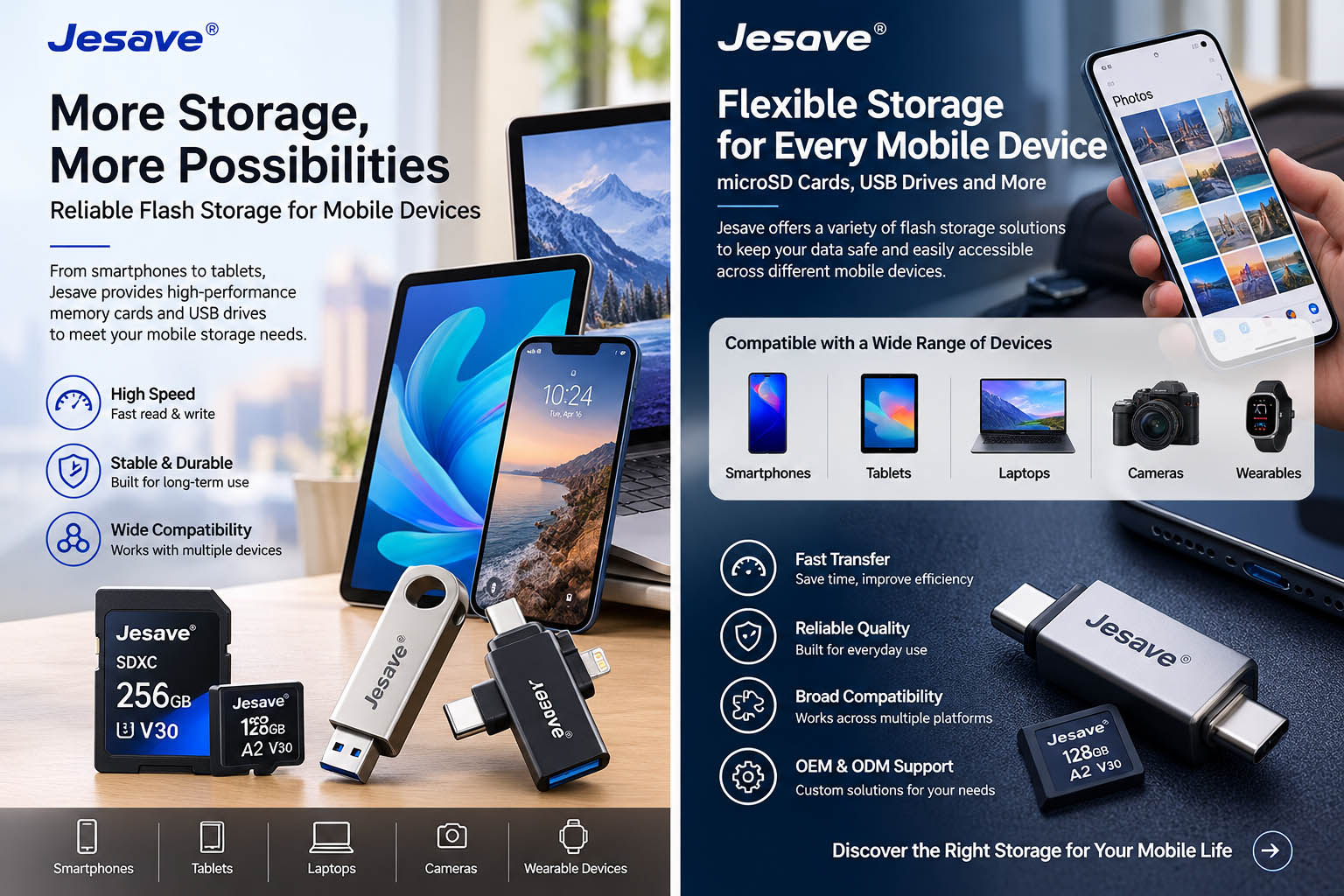
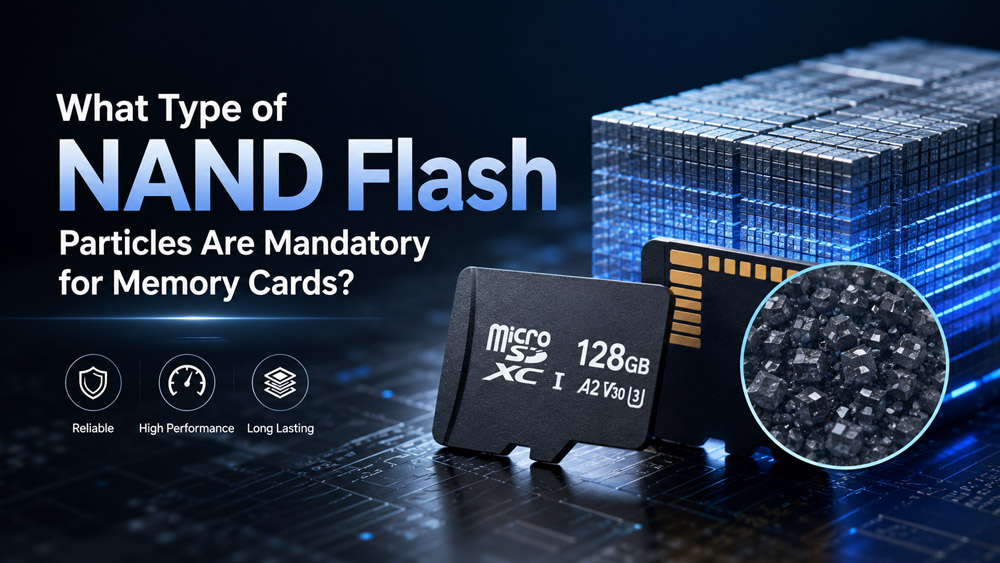
Memory cards, as the most mainstream portable storage media for consumer electronics, industrial terminals, and intelligent devices, rely entirely on NAND flash particles as the core data storage carrier. The performance stability, service life, cost control, and compatibility of memory cards are fundamentally determined by the type of built-in NAND flash particles. In the standardized manufacturing and market application system of the memory card industry, not all NAND flash types are applicable. After years of industry iteration and standard refinement, specific NAND flash particle specifications have formedmandatory application norms for memory card mass production and commercial use. This article systematically analyzes the mandatory NAND flash particle types for memory cards, sorts out their technical characteristics, applicable scenarios, and industry mandatory logic, and clarifies the differentiated positioning of various flash particles in memory card products.
1. Classification and Basic Attributes of Mainstream NAND Flash Particles
NAND flash particles are classified by the number of data bits stored in a single memory cell, forming four mainstream types: SLC (Single-Level Cell), MLC (Multi-Level Cell), TLC (Triple-Level Cell), and QLC (Quad-Level Cell). Each type has significant differences in storage density, erasure cycle life, read-write speed, and manufacturing cost, which directly determines its applicability to memory card products.
SLC stores 1 bit of data per cell, featuring ultra-high stability, fast read-write speed, and a service life of 50,000 to 100,000 erasure cycles, but it has low storage density and high unit cost, making it unable to meet the cost-effective requirements of civilian memory cards. MLC stores 2 bits per cell, with balanced performance and a service life of 3,000 to 10,000 cycles, but its comprehensive cost and density are inferior to mainstream products in the current market. TLC stores 3 bits per cell, achieving a perfect balance of high density, low cost and qualified durability, with a mainstream service life of 500 to 1,000 erasure cycles. QLC, storing 4 bits per cell, has the highest storage density and lowest cost, but its poor durability and slow write speed limit its large-scale application in standard memory cards.
2. Mandatory NAND Flash Type for Civilian Standard Memory Cards: 3D TLC NAND
In the current global memory card market covering SD cards, TF cards, and microSD cards, 3D TLC NAND flash has become the only mandatory mainstream particle type for mass-produced civilian memory cards, which is an industry consensus formed by market demand, technical standards and commercial benefits. It is the default configuration for all mainstream branded memory cards and compliant industrial civilian dual-use memory cards.
From the perspective of industry mandatory logic, first, TLC NAND solves the core contradiction between storage capacity and manufacturing cost. Compared with SLC and MLC, TLC’s three-bit single-cell storage mode greatly improves unit wafer storage density, enabling memory cards to achieve large-capacity output from 32GB to 2TB at low cost, which meets the civilian market’s demand for high-capacity and cost-effective portable storage. Second, with the maturity of 3D stacking technology, traditional planar 2D TLC’s stability defects have been completely optimized. 3D TLC NAND realizes three-dimensional vertical stacking of memory cells, effectively avoiding cell interference and data loss risks of planar particles, and greatly improving product stability and anti-interference ability.
In addition, supporting firmware algorithms such as built-in ECC error correction, global wear leveling and bad block management have further made up for the slight shortage of TLC’s erasure life. After technical optimization, the actual service life of TLC memory cards can fully meet the daily read-write frequency of consumer scenarios such as mobile phones, cameras, and wearable devices, reaching the industry’s mandatory durability qualification standard for memory cards. At present, all mainstream memory card industry specifications, including SD Association standards, take 3D TLC NAND as the core mandatory flash particle for standard commercial memory cards.
3. Special Scenario Mandatory Types: SLC and pSLC for Industrial-Grade Memory Cards
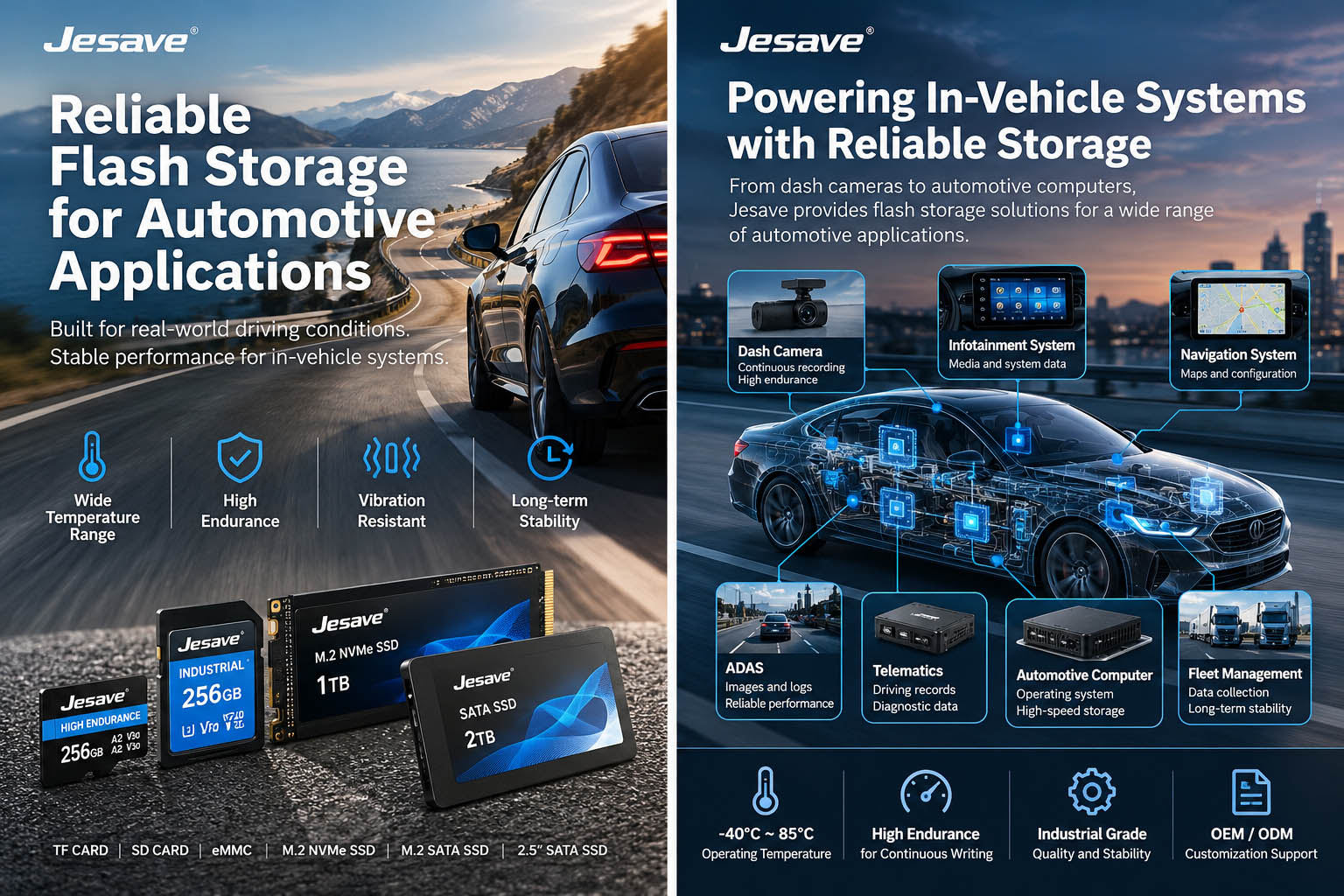
For industrial-grade memory cards used in high-frequency erasure, extreme temperature, and long-term stable operation scenarios such as industrial control equipment, vehicle-mounted terminals, and monitoring systems, SLC NAND and optimized pSLC (pseudo SLC) particles are mandatory, replacing TLC particles as the core storage medium. This is a clear mandatory specification for industrial memory card differentiation from civilian products in the industry.
SLC NAND’s ultra-high durability (50,000+ erasure cycles) and extreme environmental adaptability can cope with 7×24-hour uninterrupted high-intensity read-write work and extreme temperature environments from -40℃ to 85℃, ensuring zero data loss and stable operation in industrial harsh scenarios, which is an unreplaceable advantage of TLC and QLC particles. However, due to its high cost, SLC is only mandatory for high-reliability industrial memory cards and cannot be popularized in civilian products.
pSLC, as an optimized transitional particle, realizes SLC-level durability by upgrading MLC particle algorithms and shielding partial storage units, with a service life 6-7 times that of ordinary MLC. It balances industrial stability and moderate cost, and has become a mandatory particle type for mid-end industrial memory cards, filling the gap between high-cost SLC and low-durability TLC in industrial scenarios.
4. Non-Mandatory and Restricted NAND Types for Memory Cards
MLC and QLC NAND flash particles are explicitly excluded from the mandatory specification list of standard memory cards and are restricted from being used as mainstream mass-produced particles in the industry. Traditional MLC NAND has been completely phased out of the civilian memory card market due to low density, high comprehensive cost and insufficient cost performance, and only a small number of early stock industrial products are in use, which is no longer in line with current industry mandatory standards.
QLC NAND, although with higher density and lower cost, has inherent defects such as low erasure life (less than 300 cycles), slow write speed and poor data retention. It is only suitable for read-intensive and low-write-frequency storage scenarios such as cloud storage and fixed data archiving. It cannot meet the basic durability and stability mandatory standards of memory cards for frequent plugging and unplugging and random read-write use, so it is prohibited from being used as a conventional particle for standard memory cards, and only a few low-end ultra-low-capacity trial products adopt it.
5. Industry Standard Conclusion and Development Trend
To sum up, the mandatory NAND flash particle types for memory cards show a clear scenario-based hierarchical norm in the industry: 3D TLC NAND is the mandatory standard particle for all civilian commercial memory cards, covering 90%+ of the global memory card market share; SLC/pSLC NAND is the exclusive mandatory particle for industrial high-reliability memory cards; MLC and QLC are non-mandatory restricted particles and are not applicable to standard memory card mass production.
In terms of future development trends, with the continuous upgrading of 3D stacking technology (128-layer, 216-layer and higher stacking processes), 3D TLC NAND will further improve stability and durability, and continue to maintain its mandatory mainstream status in the memory card industry. At the same time, optimized QLC particles with enhanced error correction and wear leveling algorithms may break through technical limitations in the future, but in the current industry standard system, they still cannot replace TLC’s mandatory core position. The scenario-based mandatory matching of NAND flash particles will remain the basic technical principle for memory card design, production and quality inspection.