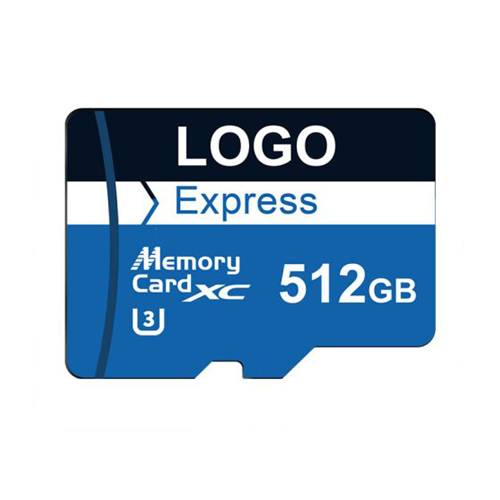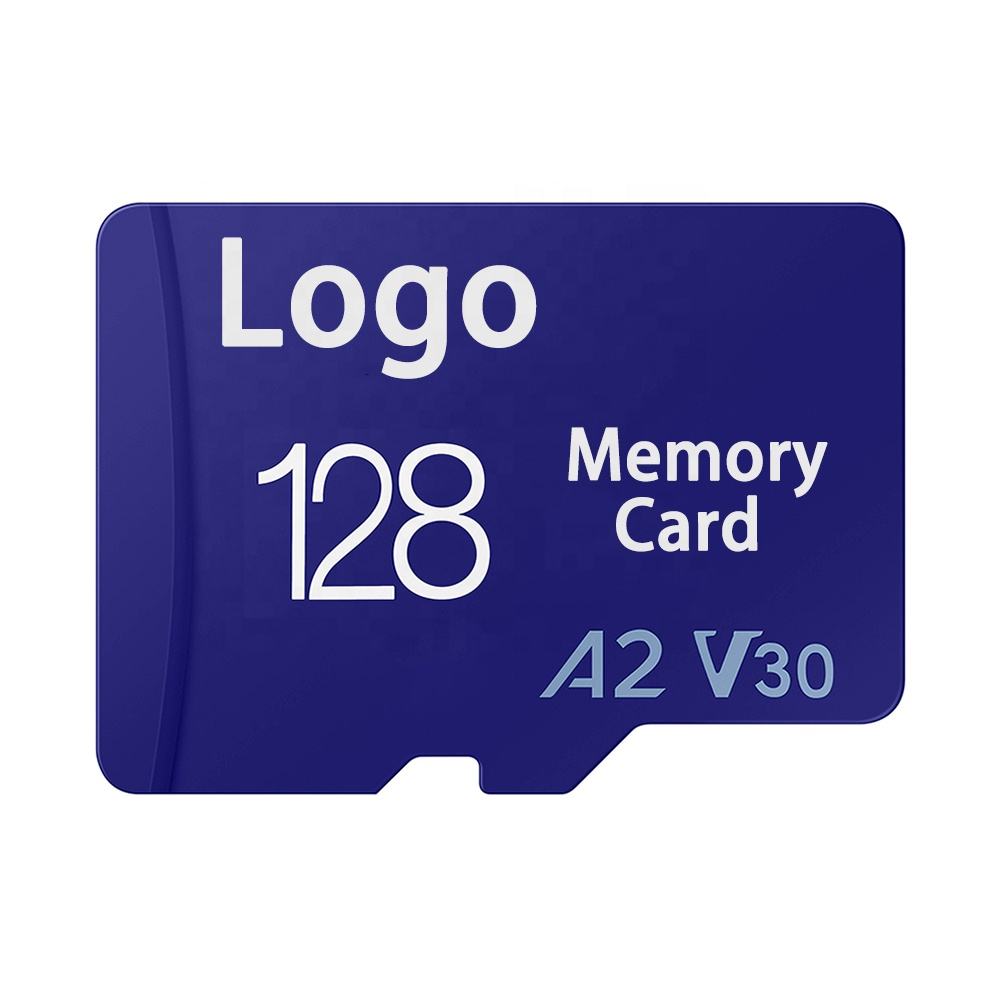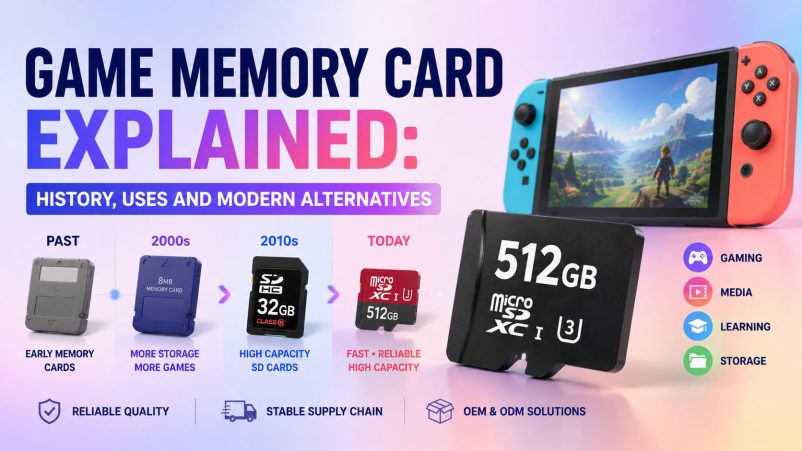
A game memory card is a removable storage device originally designed to save game progress, profiles and configuration data. As gaming hardware evolved, dedicated memory cards gradually expanded from simple save storage into higher-capacity solutions for games, downloadable content, media and portable digital applications.
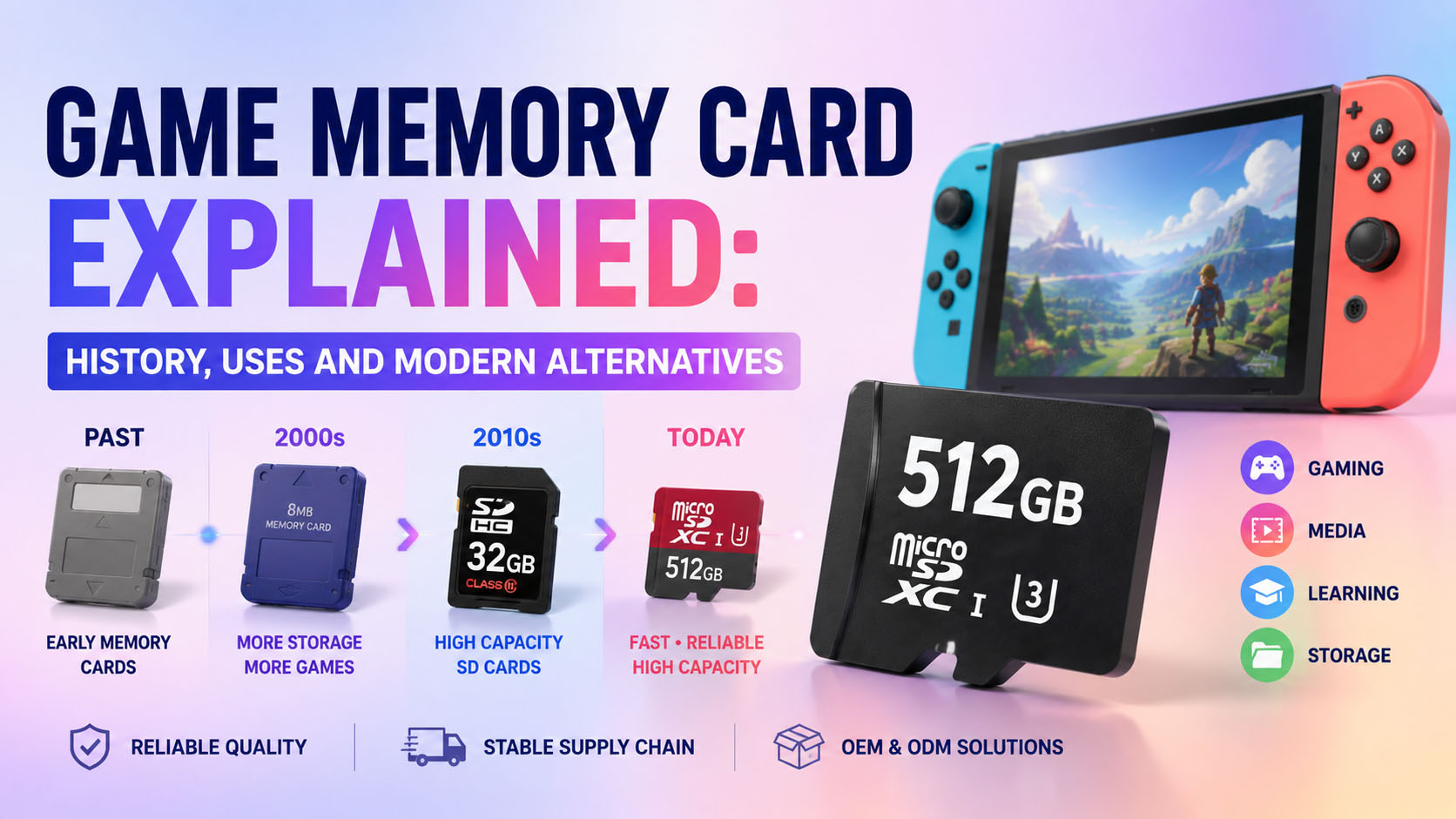
From Save Data to Modern Game Storage
Early consoles often used proprietary memory cards with limited capacity. Modern gaming systems increasingly rely on SD, microSD, microSDXC and high-speed flash storage, offering capacities from tens of gigabytes to 1TB or more, depending on device compatibility.
Today, the right gaming memory card should be evaluated by more than capacity:
Compatibility + NAND quality + controller performance + read/write stability + endurance + capacity
For gaming brands and distributors, these factors directly influence product reliability and customer experience.
What Modern Alternatives Offer
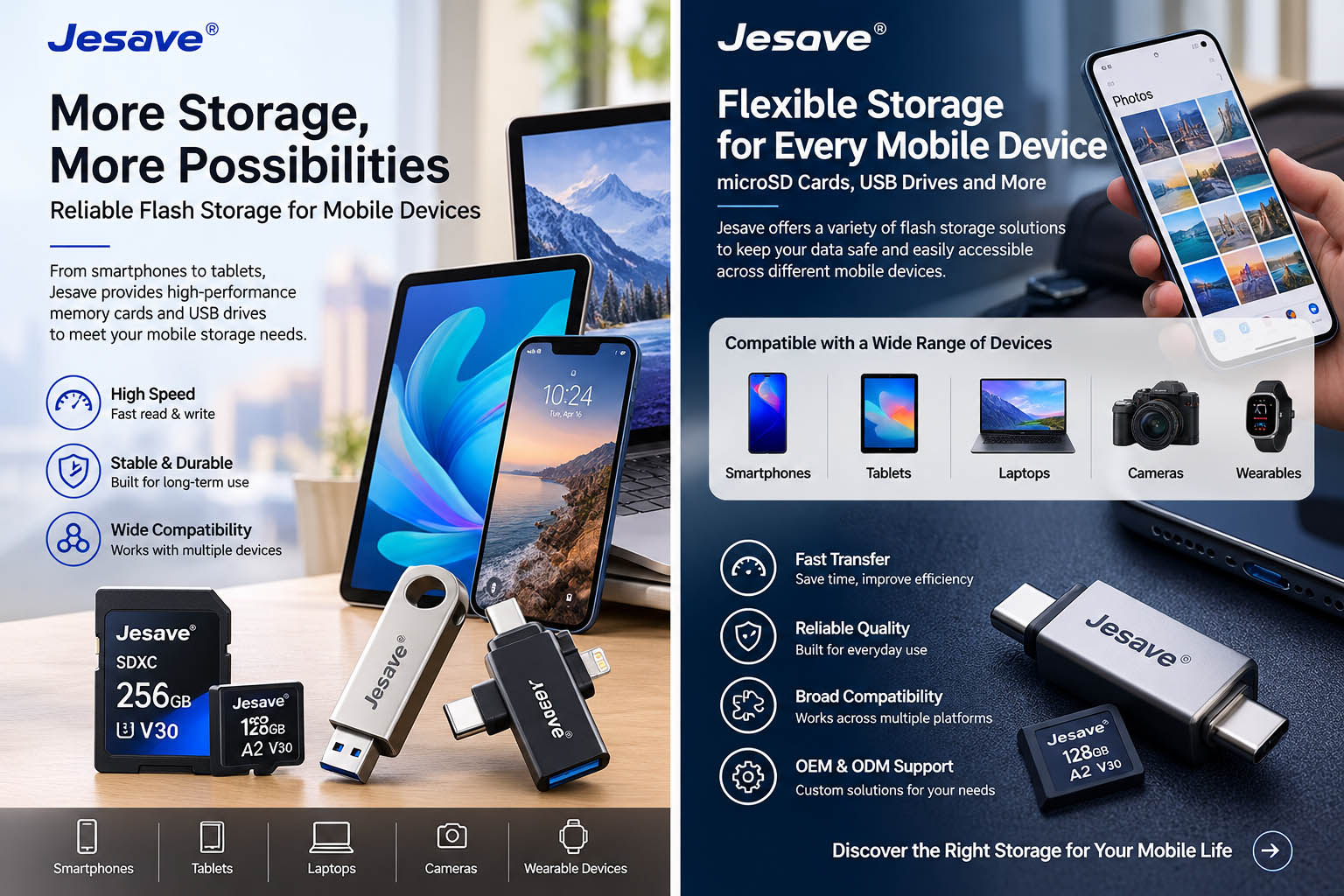
Modern flash memory cards provide significantly greater capacity and flexibility than traditional game memory cards. They can support game storage, downloadable content, multimedia, educational applications, handheld gaming and digital devices.
However, compatibility remains critical. Different consoles may require specific card formats, interfaces or performance levels, so storage specifications should always match the target device.
Why Choose an Experienced Memory Card Manufacturer?
A professional storage manufacturer can provide more than finished cards. An integrated memory card supply chain can cover NAND and controller sourcing, capacity planning, firmware configuration, assembly, performance testing and quality inspection.
This supply-chain integration helps customers achieve stable component availability, consistent quality, competitive costs and scalable production.
OEM/ODM Game Memory Card Solutions
Gaming brands, wholesalers and retailers can also develop customized products through OEM/ODM manufacturing. Options may include:
- Custom storage capacity
- Brand logo and card design
- Customized packaging and labeling
- Retail-ready configurations
- Application-specific storage solutions
From traditional game memory cards to modern microSD and SD storage, the technology continues to evolve—but the fundamentals remain the same: reliable flash storage, stable performance and strong compatibility.
For gaming brands seeking dependable storage products, combining storage-industry expertise, a reliable supply chain and flexible OEM capability provides a stronger path from product concept to mass production.