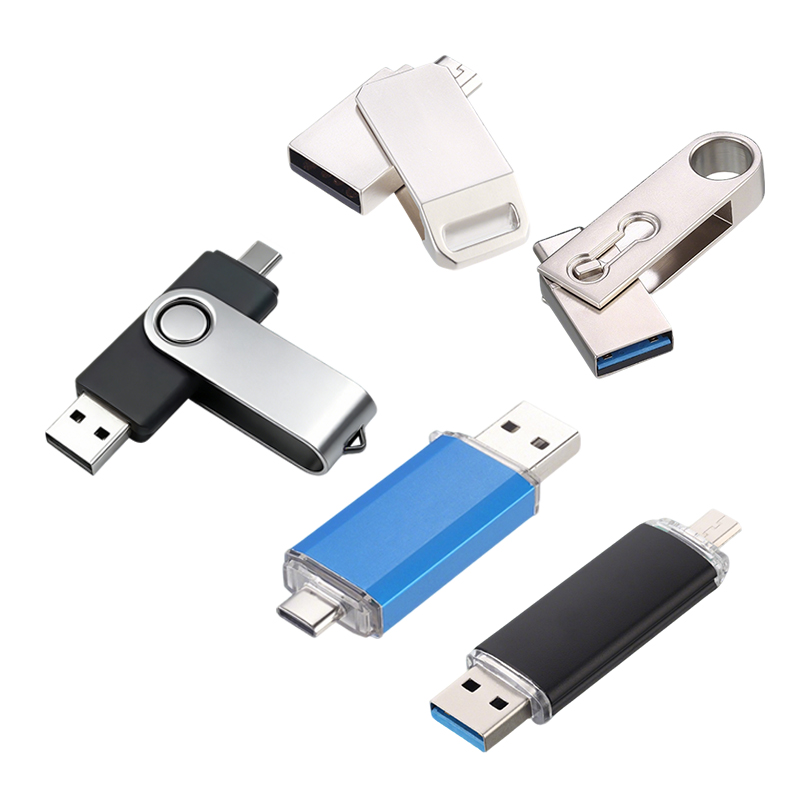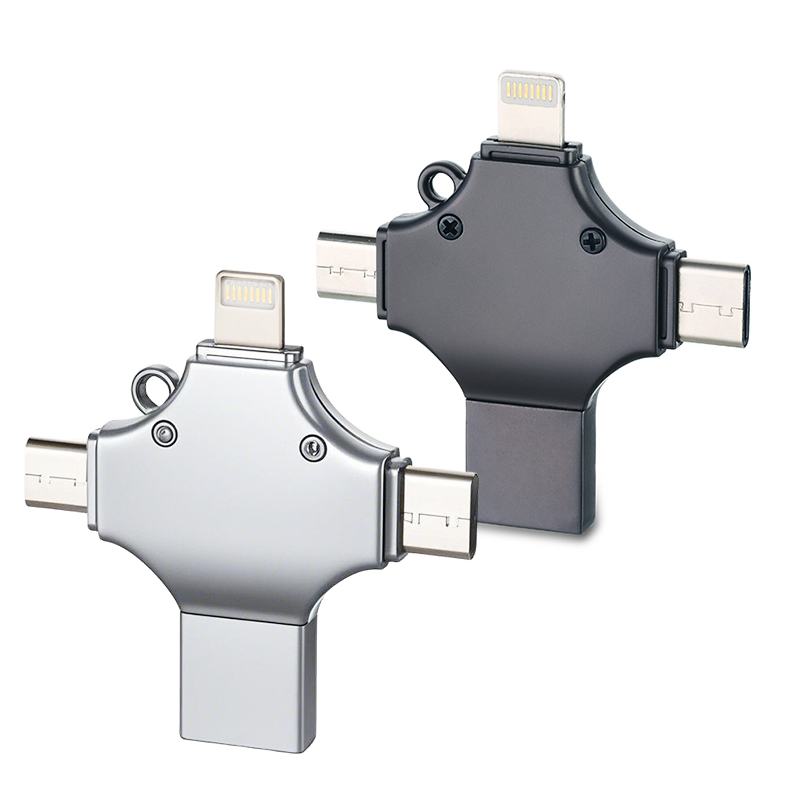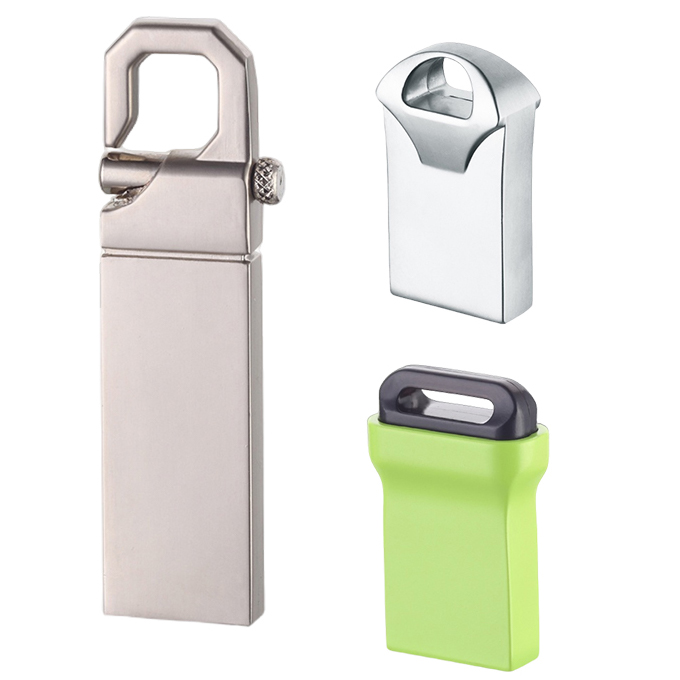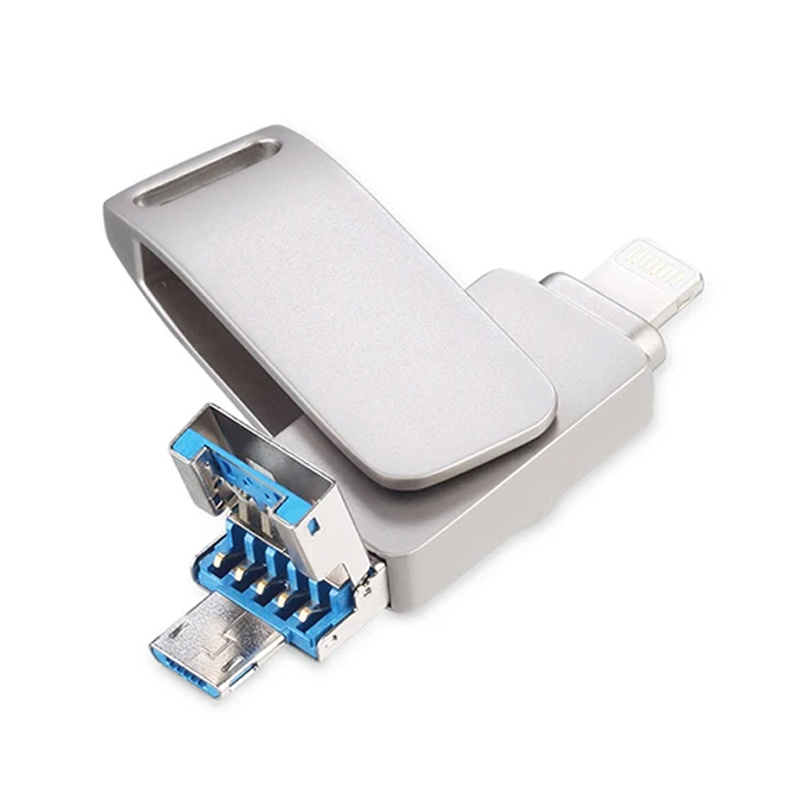
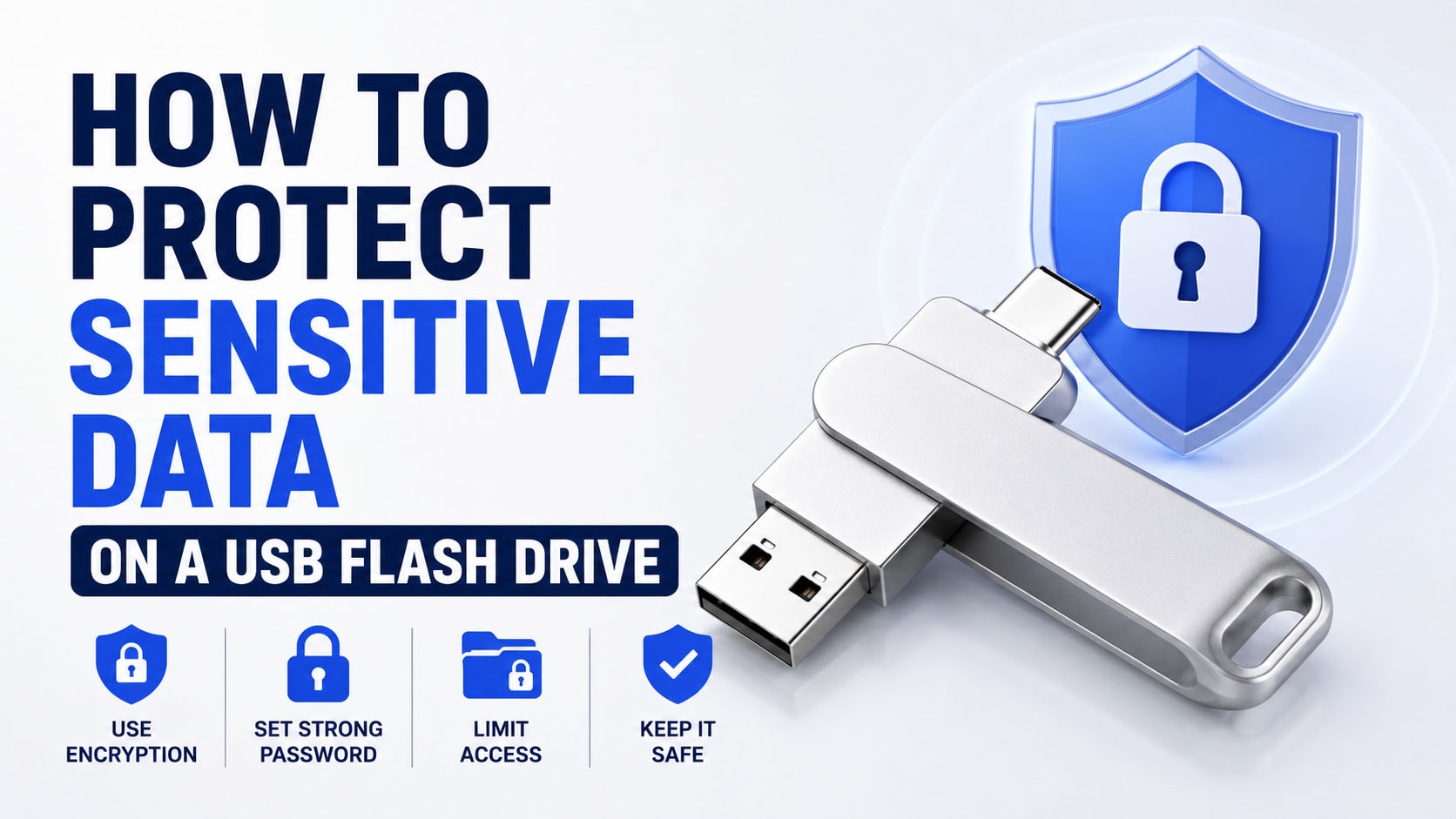
USB flash drives are convenient for portable backup, file transfer, and business data storage. For sensitive information, however, storage capacity alone is not enough. Data security requires encryption, access control, reliable flash memory, proper handling, and multiple backups.
Best Ways to Protect Sensitive Data
| Method | Protection Level | Recommendation |
|---|---|---|
| Encryption | ★★★★★ | Essential for sensitive data |
| Strong Password/PIN | ★★★★★ | Prevent unauthorized access |
| Malware Scanning | ★★★★☆ | Scan before opening files |
| Limited Access | ★★★★★ | Restrict authorized users |
| Safe Ejection | ★★★★☆ | Reduce file corruption risk |
| Multiple Backups | ★★★★★ | Protect against device failure |
| Secure Storage | ★★★★☆ | Avoid loss, heat and moisture |
Best practice: Use encryption + access control + backup redundancy rather than relying on the USB drive alone.
USB Flash Drive Security Risks
| Risk | Possible Result | Protection |
|---|---|---|
| Lost or Stolen Drive | Data exposure | Encryption |
| Malware | File infection | Antivirus scanning |
| Accidental Deletion | Data loss | Additional backup |
| Flash Failure | File corruption | Quality NAND + multiple copies |
| Counterfeit Capacity | Data loss | Capacity verification |
| Unauthorized Access | Confidentiality breach | Password / authentication |
| Physical Damage | Device failure | Durable housing |
Encryption: The First Line of Defense
Encryption converts readable files into protected data that requires the correct authentication method to access.
| Solution | Suitable For |
|---|---|
| Encrypted Files | Individual sensitive files |
| Software Encryption | General users |
| Hardware Encryption | Business / enterprise |
| Password Authentication | Personal and business data |
| PIN Authentication | Controlled-access applications |
For highly sensitive business information, consider a solution with strong encryption and authentication, rather than an ordinary unprotected USB drive.
How NAND Flash and Controller Quality Matter
Data security also depends on storage reliability. If the flash memory or controller is unstable, encrypted data can still be lost through device failure.
| Component | Key Role |
|---|---|
| NAND Flash | Stores data |
| Controller | Manages NAND and data operations |
| ECC | Helps correct certain errors |
| Firmware | Flash and device management |
| PCB | Electrical stability |
| USB Interface | Data transfer |
| Housing | Physical protection |
A well-matched NAND + controller + firmware platform helps provide consistent performance and reliable data storage.
Choose the Right NAND for the Application
| NAND Type | General Characteristics | Typical Positioning |
|---|---|---|
| SLC | High endurance, high cost | Specialized |
| MLC | High endurance | Professional |
| TLC | Balanced cost/capacity | Mainstream |
| QLC | High density, cost focused | Capacity-oriented |
NAND selection should consider capacity, workload, endurance, performance, cost, and target market.
USB Interface Selection
| Interface | Best Application |
|---|---|
| USB-A | Traditional PCs |
| USB-C | Modern laptops, tablets and phones |
| USB-A + USB-C | Multi-device environments |
| USB 3.x | Faster data transfer |
| USB 2.0 | Basic file storage |
For modern products, USB-C and dual-interface USB flash drives can provide wider compatibility.
Secure USB Flash Drive Supply Chain
For B2B buyers, security and reliability begin with a controlled supply chain.
| Supply Chain Capability | Buyer Benefit |
|---|---|
| Stable NAND Sourcing | Consistent quality |
| Controller Selection | Platform optimization |
| NAND + Controller Matching | Better stability |
| Firmware Management | Consistent performance |
| Factory Testing | Lower defect rate |
| Capacity Verification | Reduce fake-capacity risk |
| Batch QC | Consistent mass production |
| Alternative Components | Lower supply risk |
A professional storage supplier can manage NAND sourcing → controller matching → PCB → assembly → testing → packaging within one supply chain.
USB Flash Drive OEM & ODM
Sensitive-data storage products can be customized for different brands and industries.
| OEM / ODM Option | Customization |
|---|---|
| Logo | Printing / Laser engraving |
| Housing | Standard / Custom |
| Color | Custom |
| Capacity | 32GB–1TB+ depending on platform |
| Interface | USB-A / USB-C / Dual |
| Encryption | Product-specific |
| Authentication | Product-specific |
| Packaging | Retail / B2B |
| QC | Customer-defined standards |
OEM projects can combine custom branding, storage specifications, security requirements, packaging, and QC standards.
How to Choose a Secure USB Flash Drive
| Selection Factor | Priority |
|---|---|
| Encryption | ★★★★★ |
| Authentication | ★★★★★ |
| NAND Quality | ★★★★★ |
| Controller | ★★★★★ |
| Firmware | ★★★★★ |
| Real Capacity | ★★★★★ |
| Factory QC | ★★★★★ |
| Transfer Performance | ★★★★☆ |
| Supply Stability | ★★★★★ |
| OEM Capability | ★★★★☆ |
Do not evaluate a secure USB drive based only on GB capacity and advertised read speed.
USB Flash Drive vs Cloud Storage
| Feature | Secure USB | Cloud Storage |
|---|---|---|
| Offline Access | ✓ | Usually No |
| Internet Required | No | Usually Yes |
| Physical Loss Risk | Higher | Lower at user location |
| Remote Access | Limited | ✓ |
| Encryption | Product dependent | Service dependent |
| Recurring Cost | Usually No | Often |
| Automatic Backup | Limited | Often Available |
For critical data, encrypted USB + cloud backup can provide both offline and off-site protection.
3-2-1 Backup Strategy
| Rule | Example |
|---|---|
| 3 Copies | Original + 2 backups |
| 2 Storage Types | USB + cloud |
| 1 Off-Site Copy | Cloud / separate location |
Encryption protects confidentiality; multiple backups protect availability.
Sensitive Data Protection Checklist
| Action | Recommended |
|---|---|
| Encrypt Sensitive Files | ✓ |
| Use Strong Passwords | ✓ |
| Restrict Access | ✓ |
| Scan USB Files | ✓ |
| Safely Eject | ✓ |
| Keep Multiple Copies | ✓ |
| Verify Backup Data | ✓ |
| Buy from Reliable Supplier | ✓ |
| Replace Damaged Drives | ✓ |
FAQ: USB Flash Drive Data Security
Is a USB flash drive secure for sensitive data?
It can be, especially when using encryption, authentication, reliable storage components, and proper backup procedures.
Should I encrypt my USB flash drive?
Yes. Encryption is strongly recommended for sensitive business, financial, customer, or confidential files.
What happens if I lose an encrypted USB drive?
If encryption and authentication are properly implemented, unauthorized users should have significantly greater difficulty accessing the stored data.
Is hardware encryption better than software encryption?
Hardware encryption can provide an integrated security architecture, but actual security depends on the implementation, authentication, firmware, and applicable security standards.
Can a USB flash drive get infected with malware?
Yes. USB drives can carry malware. Scan files and use trusted computers when transferring sensitive information.
Does NAND quality affect data security?
Yes, indirectly. Poor or unstable NAND can increase the risk of data corruption and loss. Reliable NAND and a suitable controller are important for dependable storage.
Can sensitive USB flash drives be OEM customized?
Yes. OEM/ODM suppliers can customize NAND, controller platform, capacity, USB interface, housing, logo, encryption solution, packaging, and QC requirements, depending on the product platform.
What should B2B buyers ask a secure USB supplier?
| Question | Purpose |
|---|---|
| What NAND is used? | Assess storage quality |
| Which controller? | Evaluate stability |
| What encryption method? | Understand data protection |
| How is authentication handled? | Control access |
| Is capacity verified? | Confirm actual storage |
| What QC tests are performed? | Evaluate production quality |
| Can security specifications be customized? | Support projects |
| What is the MOQ? | Evaluate purchasing |
| Is supply stable? | Support repeat orders |
Final Takeaway
Protecting sensitive data on a USB flash drive requires more than a password.
Encryption + Authentication + Reliable NAND + Quality Controller + Factory QC + Multiple Backups
For B2B buyers, a strong storage supply chain and OEM/ODM capability can further improve product consistency, customization flexibility, and long-term supply reliability.