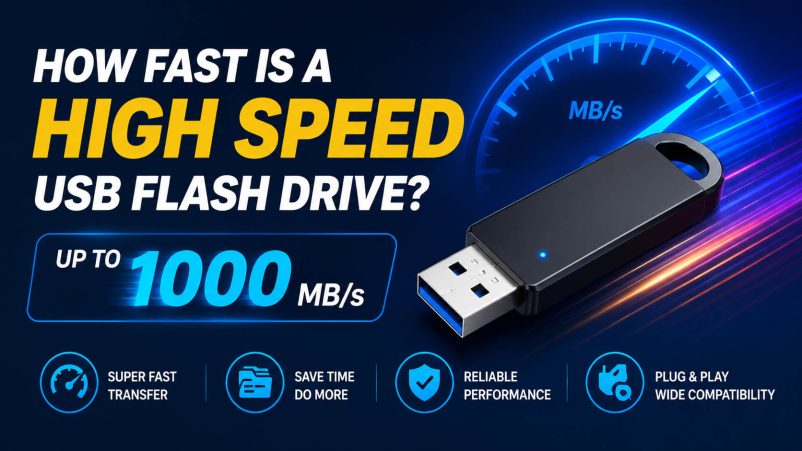
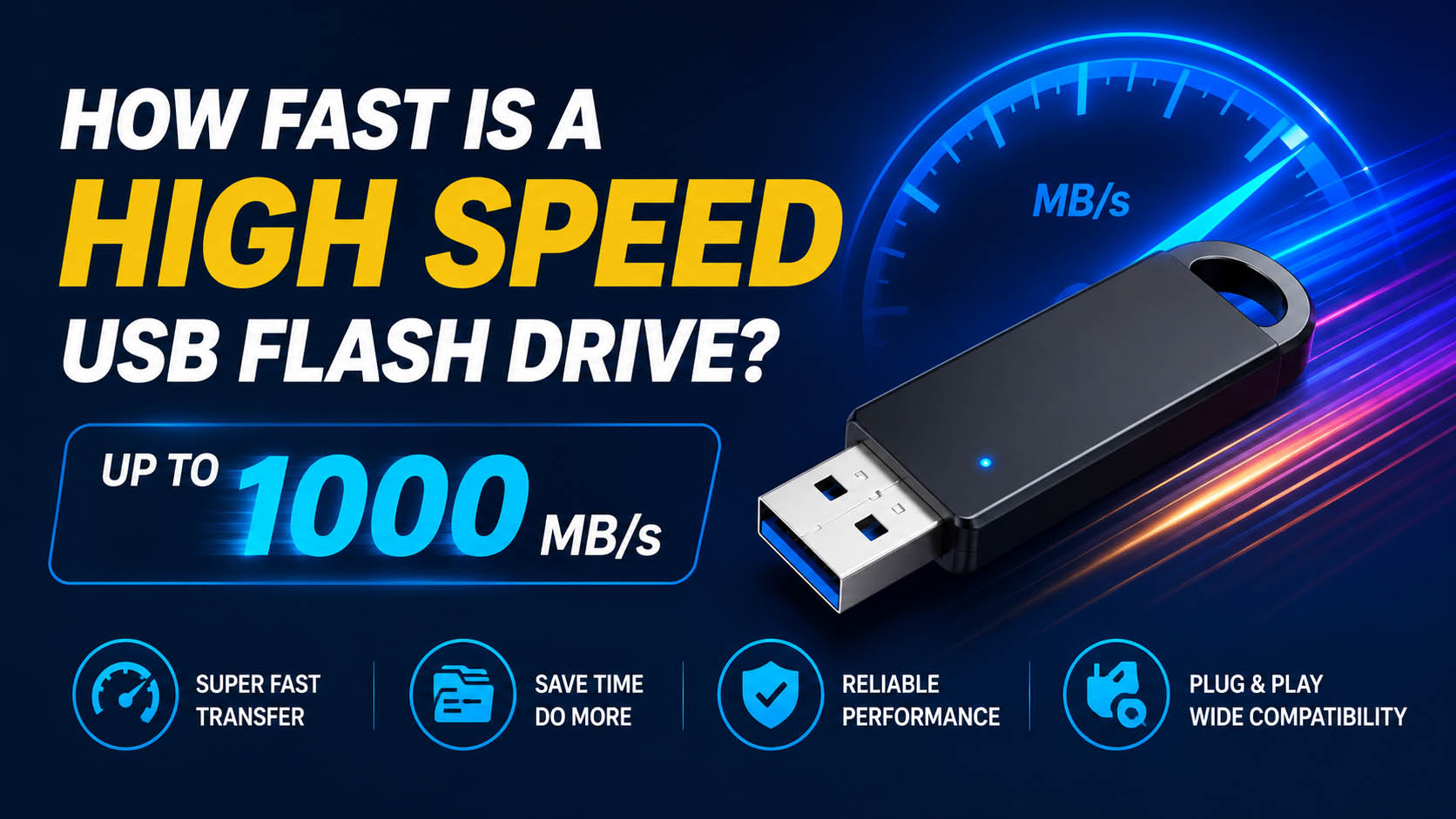
A high-speed USB flash drive can deliver very different real-world performance depending on its USB interface, NAND flash, controller, firmware, and host device.
For everyday storage, 100–300 MB/s is already suitable for many applications. Premium USB flash drives can reach 500 MB/s or more, while some high-performance USB storage products can approach or exceed 1,000 MB/s under suitable hardware conditions.
Quick answer: USB interface speed sets the ceiling, but NAND and controller quality determine how fast the drive actually performs.
USB Flash Drive Speed Comparison
| USB Interface | Theoretical Bandwidth | Typical Position |
|---|---|---|
| USB 2.0 | 480 Mbps | Basic |
| USB 3.0 / Gen 1 | 5 Gbps | Mainstream |
| USB 3.1 / Gen 2 | 10 Gbps | High Speed |
| USB 3.2 Gen 2×2 | 20 Gbps | Premium |
| USB4 | Up to 40 Gbps+ depending on version | Advanced |
Note: Theoretical bandwidth is not the same as actual flash drive read/write speed.
What Is a Good USB Flash Drive Speed?
| Application | Suggested Read Speed |
|---|---|
| Documents | 30–100 MB/s |
| Photos | 80–200 MB/s |
| HD Video | 100–200 MB/s |
| 4K Video | 150–300+ MB/s |
| Large Backups | 200–500+ MB/s |
| Professional Media | 500 MB/s+ |
Actual requirements depend on file size, workload, and the connected device.
Read Speed vs Write Speed
For most USB flash drives, read speed is higher than write speed.
| Performance | Meaning |
|---|---|
| Read Speed | How quickly files can be copied from the drive |
| Write Speed | How quickly files can be copied to the drive |
| Sequential Speed | Important for large videos and backups |
| Random Speed | More relevant to many small files |
For video and backup applications, sustained write speed deserves particular attention.
What Determines USB Flash Drive Speed?
| Component | Effect on Speed |
|---|---|
| NAND Flash | Major influence on read/write performance |
| Controller | Manages data transfer and flash operations |
| Firmware | Optimizes performance and stability |
| USB Interface | Determines maximum connection bandwidth |
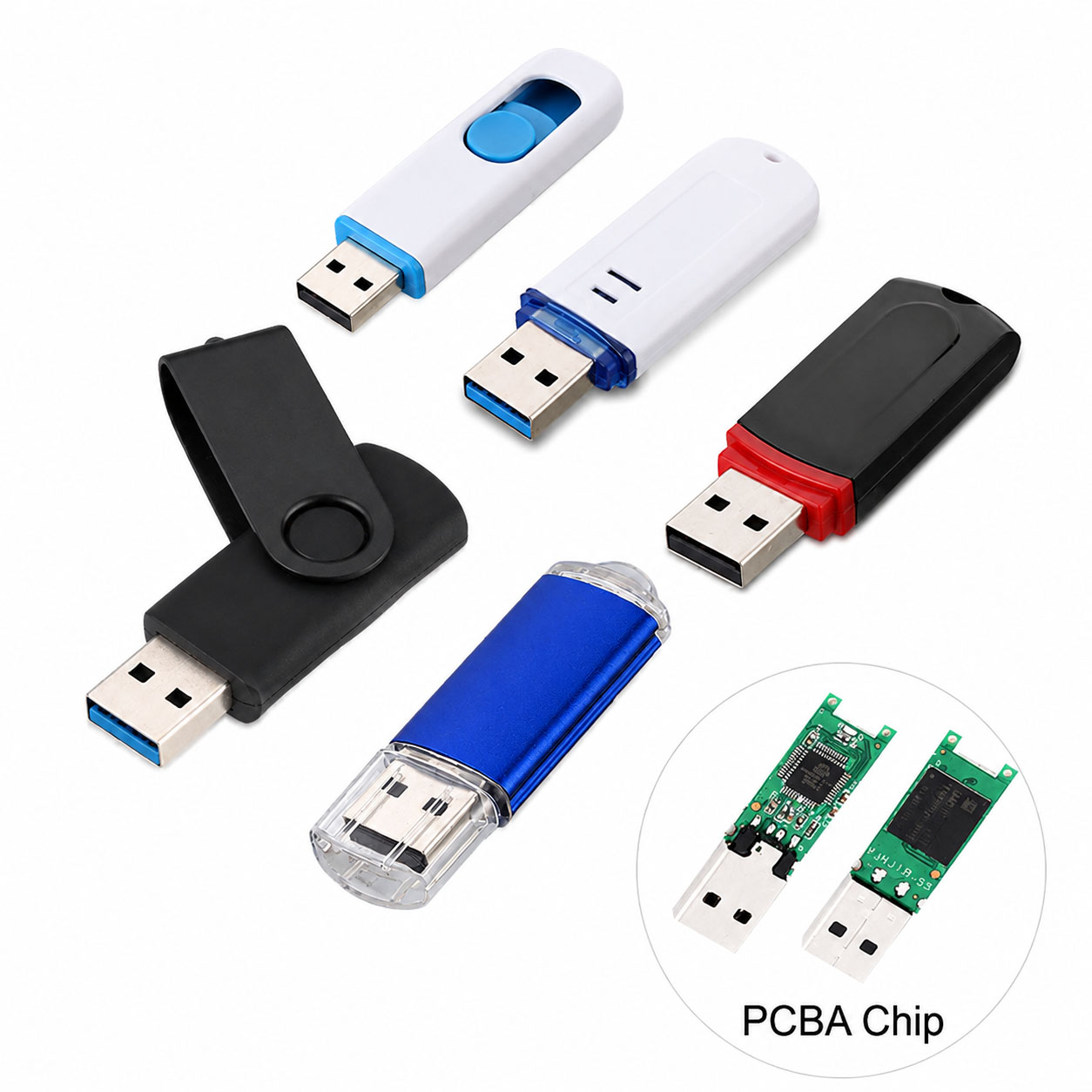
| PCB | Affects signal and power stability |
| Thermal Design | Helps maintain sustained performance |
| Host Device | Can limit the final transfer speed |
A high-speed USB flash drive should therefore be evaluated as a complete storage solution, not simply by its USB version.
Why NAND Flash and Controller Matter
Two USB 3.x flash drives can have significantly different performance.
| Configuration | Expected Result |
|---|---|
| Basic NAND + Basic Controller | Entry-level performance |
| Quality NAND + Optimized Controller | Better performance |
| High-performance NAND + Advanced Controller | Premium performance |
| Poor Component Matching | Unstable or inconsistent speed |
For high-capacity products such as 256GB, 512GB and 1TB USB flash drives, controller and NAND matching becomes especially important for sustained performance.
How to Choose a High-Speed USB Flash Drive
| Priority | What to Check |
|---|---|
| Interface | USB 3.0 / 3.1 / 3.2 |
| Read Speed | Actual tested performance |
| Write Speed | Especially important for backups |
| NAND | Quality and consistency |
| Controller | Suitable for target capacity |
| Compatibility | Host USB port and operating system |
| Testing | Capacity + speed + stability |
Do not choose a product based only on “USB 3.2” or “High Speed.” Ask for actual tested read/write specifications.
Supply Chain Advantages for USB Flash Drive Manufacturing
A stable supply chain is critical for maintaining consistent performance across bulk orders.
| Supply Chain Capability | Customer Benefit |
|---|---|
| Stable NAND Sources | Consistent quality |
| Controller Resources | Better component matching |
| Factory Production | Stable bulk capacity |
| Professional QC | Lower failure risk |
| Performance Testing | Verified specifications |
| Multiple Capacities | Flexible product selection |
For B2B buyers, strong component sourcing can also help balance performance, capacity, cost, and delivery time.
OEM & ODM High-Speed USB Flash Drive Solutions
High-speed USB flash drives are suitable for retail brands, enterprise storage, promotional products, and professional applications.
| OEM/ODM Service | Available Options |
|---|---|
| Capacity | 32GB–1TB+ |
| Interface | USB 3.0 / 3.1 / 3.2 |
| Housing | Plastic / Metal / Custom |
| Logo | Printing / Laser Engraving |
| Color | Custom Brand Colors |
| Shape | Standard / Custom |
| Packaging | Retail / Gift / Custom |
| Performance | Customized Speed Requirements |
An experienced manufacturer can match NAND + controller + USB interface according to the target market and price point.
High-Speed USB Flash Drive for Different Users
| User | Recommended Solution |
|---|---|
| Office Users | USB 3.0 |
| Photographers | USB 3.0 / 3.1 |
| Content Creators | USB 3.1 / 3.2 |
| 4K Video Users | USB 3.1 Gen 2+ |
| Professional Media Users | High-performance USB 3.2 / USB4 |
| Enterprise Backup | High-capacity + sustained write performance |
FAQ About High-Speed USB Flash Drives
Q1: How fast is a high-speed USB flash drive?
It depends on the product. Mainstream USB 3.x flash drives may deliver around 100–300 MB/s, while premium products can reach 500 MB/s or more.
Q2: Is 1,000 MB/s possible on a USB flash drive?
Yes, some high-performance USB storage products can approach or exceed 1,000 MB/s, but achieving this requires suitable NAND, controller, interface, host hardware, and thermal conditions.
Q3: Is USB 3.2 automatically faster than USB 3.0?
Not always. USB 3.2 includes different generations. For example, USB 3.2 Gen 1 is 5 Gbps, while USB 3.2 Gen 2 is 10 Gbps and Gen 2×2 is 20 Gbps.
Q4: Why is my USB 3.0 flash drive slower than advertised?
Possible reasons include:
| Reason | Impact |
|---|---|
| USB 2.0 Port | Limits interface speed |
| Slow NAND | Limits actual performance |
| Slow Controller | Reduces transfer speed |
| Small Files | Lower transfer efficiency |
| Heat | Can reduce sustained performance |
| Host Device | Hardware may become the bottleneck |
Q5: Is write speed important for video storage?
Yes. When copying large videos to a USB flash drive, sustained write speed directly affects transfer time.
Q6: Can high-speed USB flash drives be customized?
Yes. OEM/ODM manufacturers can customize capacity, USB interface, housing, logo, color, packaging, and performance specifications.
Conclusion
A high-speed USB flash drive is not defined by the USB interface alone. NAND flash, controller, firmware, thermal design, host compatibility, and actual testing all influence real-world performance.
For everyday use, USB 3.0 with reliable components is often sufficient. For large videos, backups, and professional applications, USB 3.1/3.2 high-performance solutions offer better transfer efficiency.
For B2B procurement, working with a manufacturer that combines stable NAND supply, professional QC, performance testing, OEM/ODM capability, and flexible production capacity can provide a more reliable long-term storage solution.