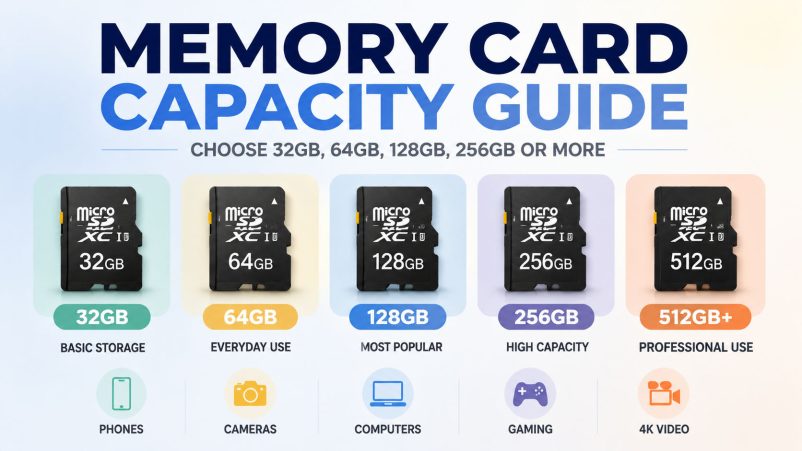
Choosing the right memory card capacity is one of the most important decisions when buying SD cards or microSD cards for phones, cameras, computers, gaming devices and industrial applications. A higher capacity does not always mean a better choice—the ideal memory card depends on the device, usage scenario, speed requirements and long-term storage needs.
For consumers, capacity determines how much data can be stored. For distributors and brands, capacity selection also affects cost, supply stability, product positioning and market demand.
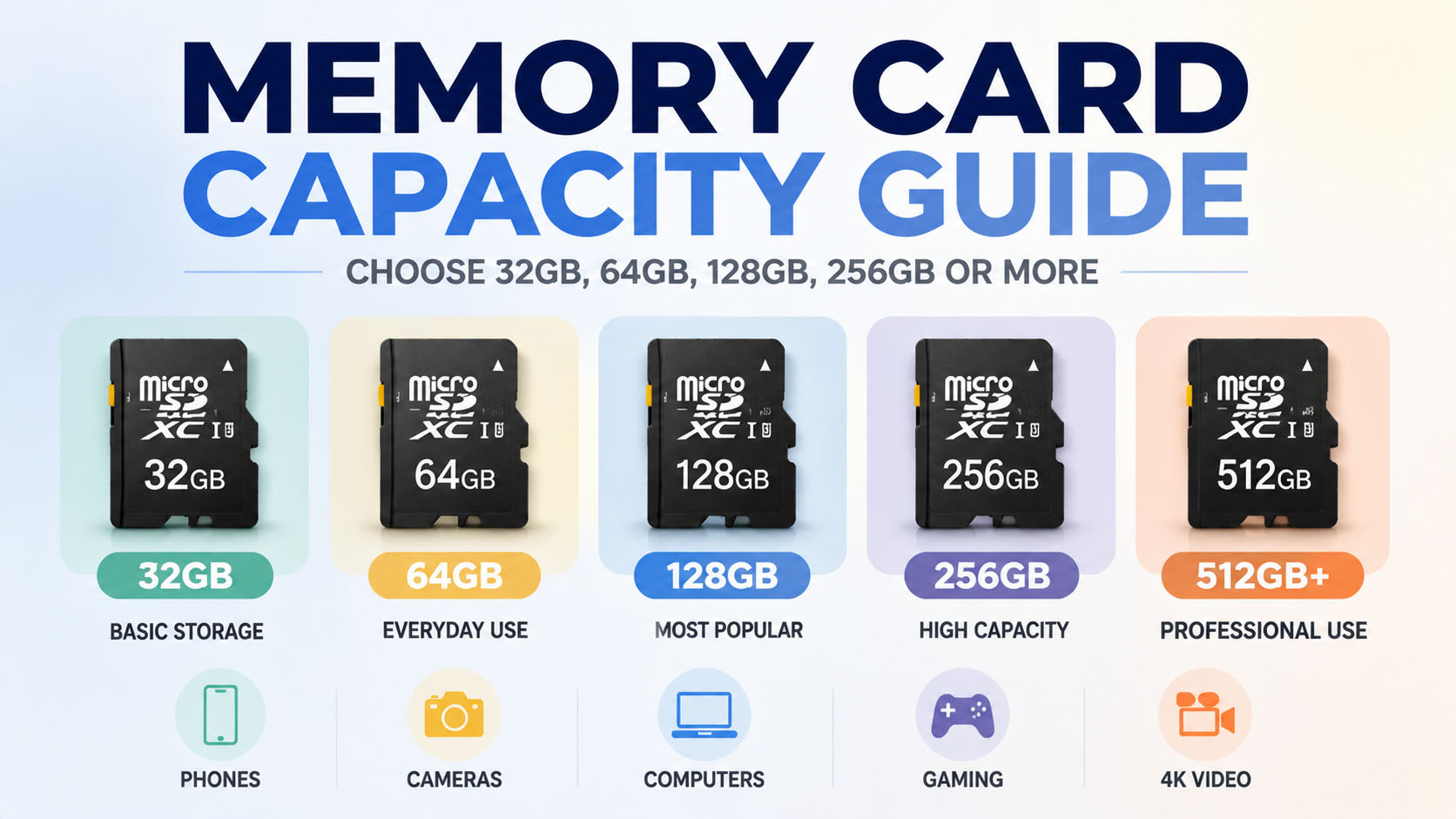
Memory Card Capacity Comparison: 32GB vs 64GB vs 128GB vs 256GB
Different capacities are designed for different applications.
| Capacity | Suitable Applications | Recommended Users |
|---|---|---|
| 32GB | Basic file storage, documents, light photography | Entry-level users |
| 64GB | Photos, music, Full HD video, daily storage | General consumers |
| 128GB | Smartphones, cameras, gaming, multimedia | Most popular mainstream choice |
| 256GB | 4K video, large photo libraries, professional use | Heavy storage users |
| 512GB+ | Professional content, large datasets, advanced devices | High-capacity applications |
32GB Memory Card
A 32GB SD card or microSD card is suitable for basic storage needs, including:
- Documents
- Small applications
- Music files
- Basic photos
- Embedded devices
It is commonly used in cost-sensitive products where storage requirements are limited.
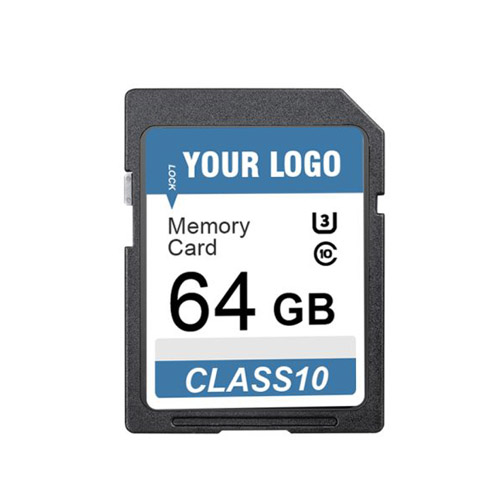
64GB Memory Card
A 64GB memory card provides a better balance between price and capacity.
Common applications include:
- Smartphones with expandable storage
- Digital cameras
- Dash cameras
- Portable devices
For everyday users, 64GB can handle thousands of photos and hours of video depending on file size and quality.
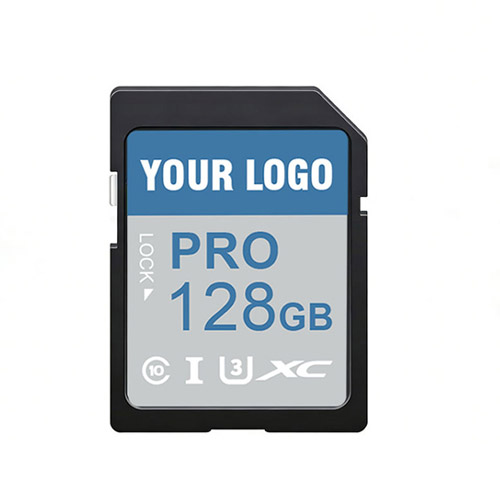
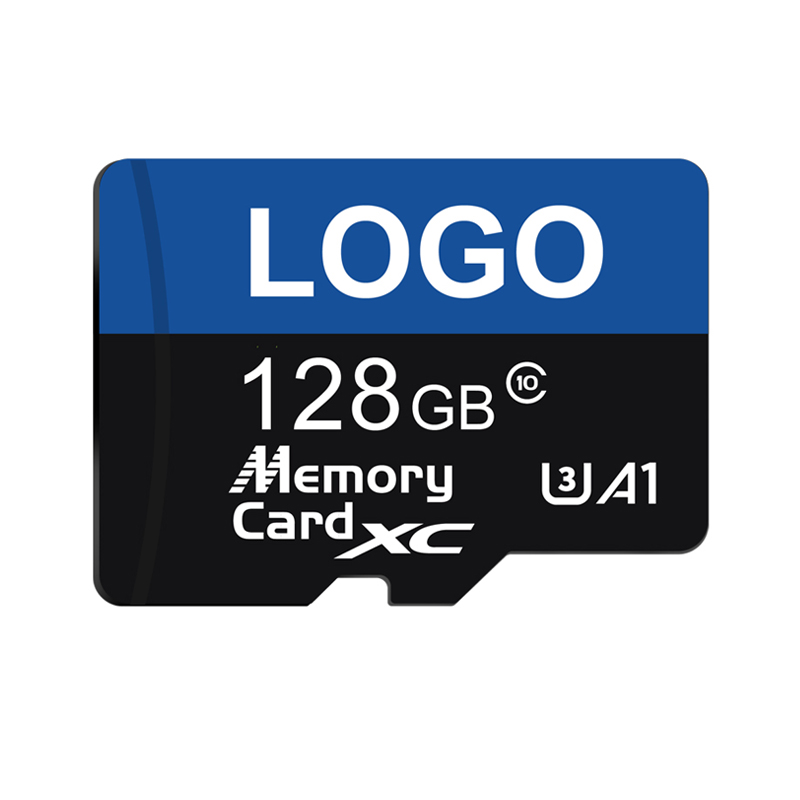
128GB Memory Card
A 128GB microSD card is currently one of the most popular capacities worldwide.
It is widely used for:
- Android phones
- Nintendo Switch and gaming devices
- Cameras
- Tablets
- Portable storage
For most consumers, 128GB provides the best combination of affordability, convenience and storage space.
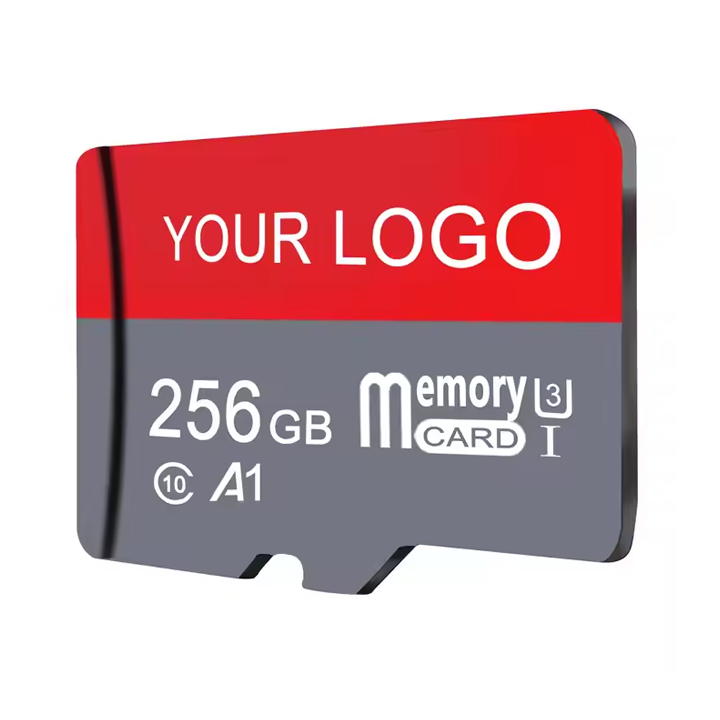
256GB Memory Card
A 256GB SD card or microSD card is ideal for users who create or store large amounts of data.
Typical applications:
- 4K video recording
- Professional photography
- Gaming libraries
- Large media collections
- Industrial equipment
For high-capacity applications, buyers should also consider sustained write performance, NAND quality and controller stability.
512GB and Above Memory Cards
High-capacity cards are increasingly used for:
- Professional cameras
- AI devices
- Industrial equipment
- Surveillance systems
- Large digital content storage
However, higher capacity requires stronger flash management technology and stricter quality control.
How to Choose the Right Memory Card Capacity?
The best memory card capacity depends on the application.
For Smartphones
Recommended:
- 64GB–128GB: Basic photos, music and files
- 128GB–256GB: Heavy daily use
- 512GB+: Large media libraries
Before purchasing, confirm whether the phone supports expandable storage.
For Cameras
Capacity selection depends on:
- Photo resolution
- Video quality
- Recording duration
- Shooting frequency
For example:
- Full HD video: 64GB–128GB
- 4K video: 128GB–256GB+
- Professional video workflows: 256GB+
For cameras, write speed and endurance are often more important than capacity alone.
For Computers and Data Transfer
Memory cards are commonly used with:
- Laptops
- Card readers
- USB adapters
- Portable devices
For computer users, the ideal capacity depends on whether the card is used for:
- File transfer
- Backup storage
- Media editing
- Portable data exchange
Memory Card Capacity Selection for B2B Buyers
For wholesalers, distributors and electronics brands, choosing memory card capacity is not only a technical decision—it is a product strategy decision.
Professional buyers usually evaluate:
- Target market demand
- Product price positioning
- Device compatibility
- Expected sales volume
- Supply stability
- Production cost
- Packaging requirements
Popular procurement combinations include:
- 64GB + 128GB for mainstream markets
- 128GB + 256GB for consumer electronics
- 256GB + 512GB for professional applications
Why Memory Card Supply Chain Matters
A reliable memory card is built through a complete storage supply chain.
Professional manufacturers manage:
NAND Flash Sourcing → Controller Matching → Firmware Optimization → Assembly → Capacity Testing → Speed Testing → Quality Inspection
Strong supply-chain capability provides:
- Stable NAND availability
- Consistent product quality
- Flexible capacity options
- Competitive production costs
- Reliable delivery schedules
- Better batch consistency
For distributors and retailers, stable quality between different production batches is critical to reducing returns and improving customer satisfaction.
OEM & ODM Memory Card Capacity Solutions
For brands that want customized storage products, OEM/ODM capability provides more flexibility.
A professional memory card manufacturer can support:
- Custom capacity selection
- Brand logo printing
- Card label design
- Customized packaging
- Retail box solutions
- Private label memory cards
- Application-specific configurations
Typical OEM workflow:
Product Requirement → Sample Development → Performance Testing → Specification Confirmation → Mass Production → Quality Control → Shipment
This allows electronics brands, gaming companies, camera accessory brands and distributors to create their own memory card product lines.
FAQ: Memory Card Capacity Guide
Is a 256GB memory card better than a 128GB card?
Not always. A 256GB card provides more storage, but performance depends on NAND quality, controller design, speed rating and device compatibility.
What is the most popular memory card capacity?
Currently, 128GB and 256GB are among the most widely used capacities for consumer electronics because they balance price and storage needs.
Is 32GB enough for a camera?
For basic photography it may be enough, but users recording HD or 4K video usually need higher capacities.
Should I buy the largest memory card available?
Not necessarily. The best choice is the capacity that matches the device and application while maintaining reliable performance.
Final Thoughts
The best memory card capacity is not simply the largest number on the package. The right choice depends on:
Device Compatibility + Storage Requirements + Speed Performance + Reliability
For end users, 128GB and 256GB often provide the best balance. For businesses, selecting the right capacity requires additional considerations such as supply chain stability, production capability and OEM flexibility.
Working with an experienced storage manufacturer allows brands and distributors to develop reliable memory card solutions—from 32GB entry-level products to high-capacity 1TB+ storage solutions—with consistent quality and scalable production support.