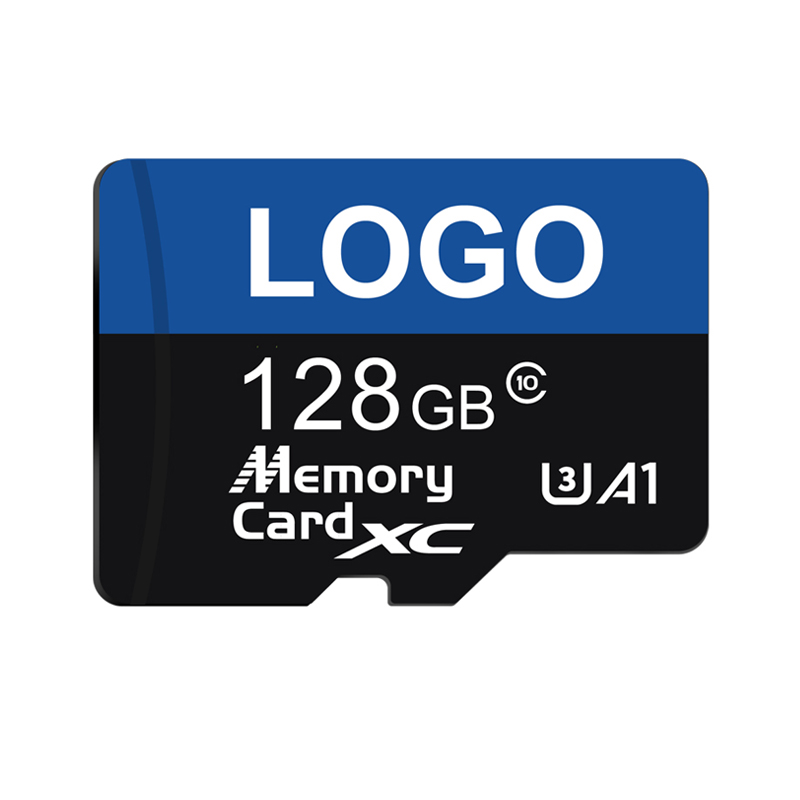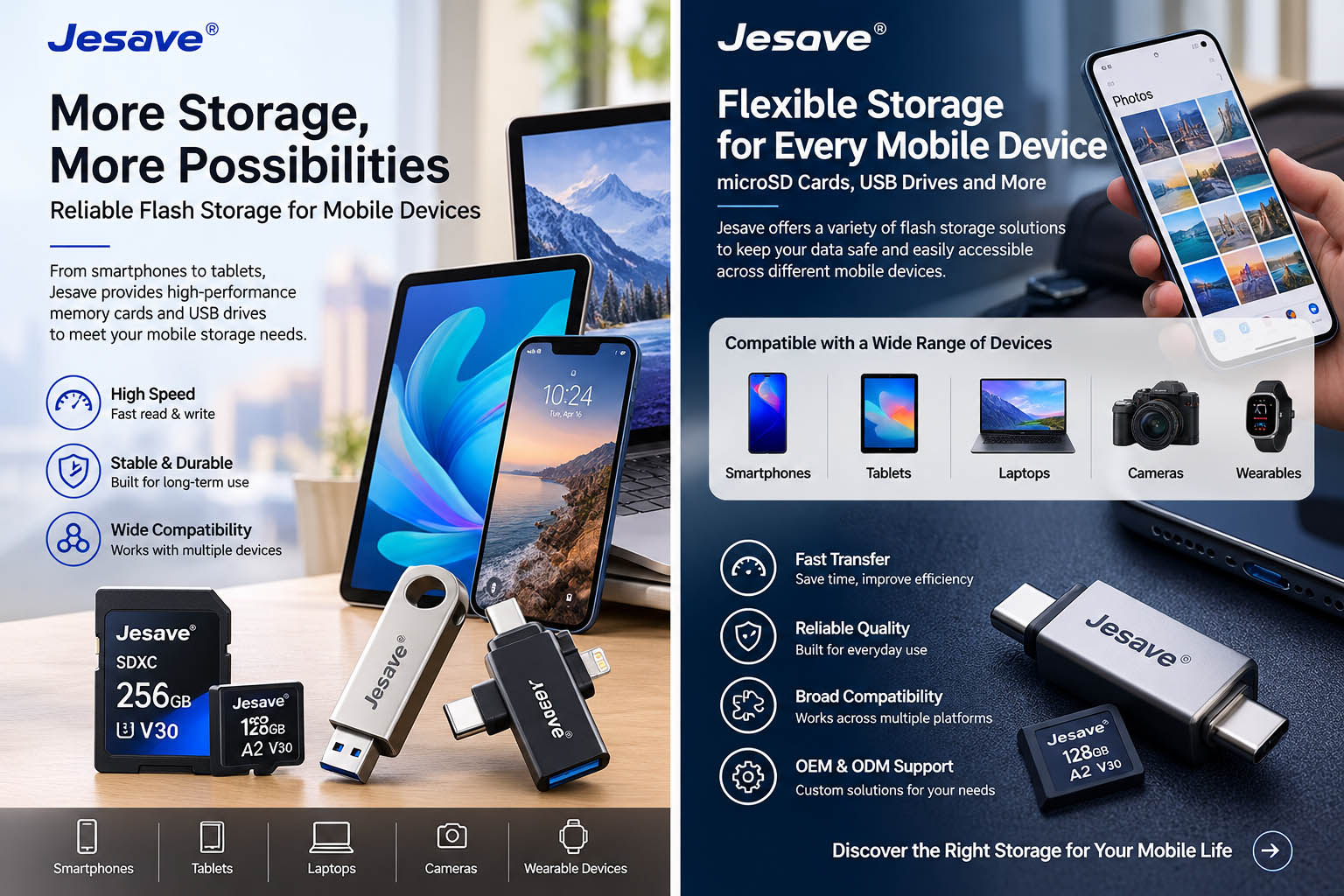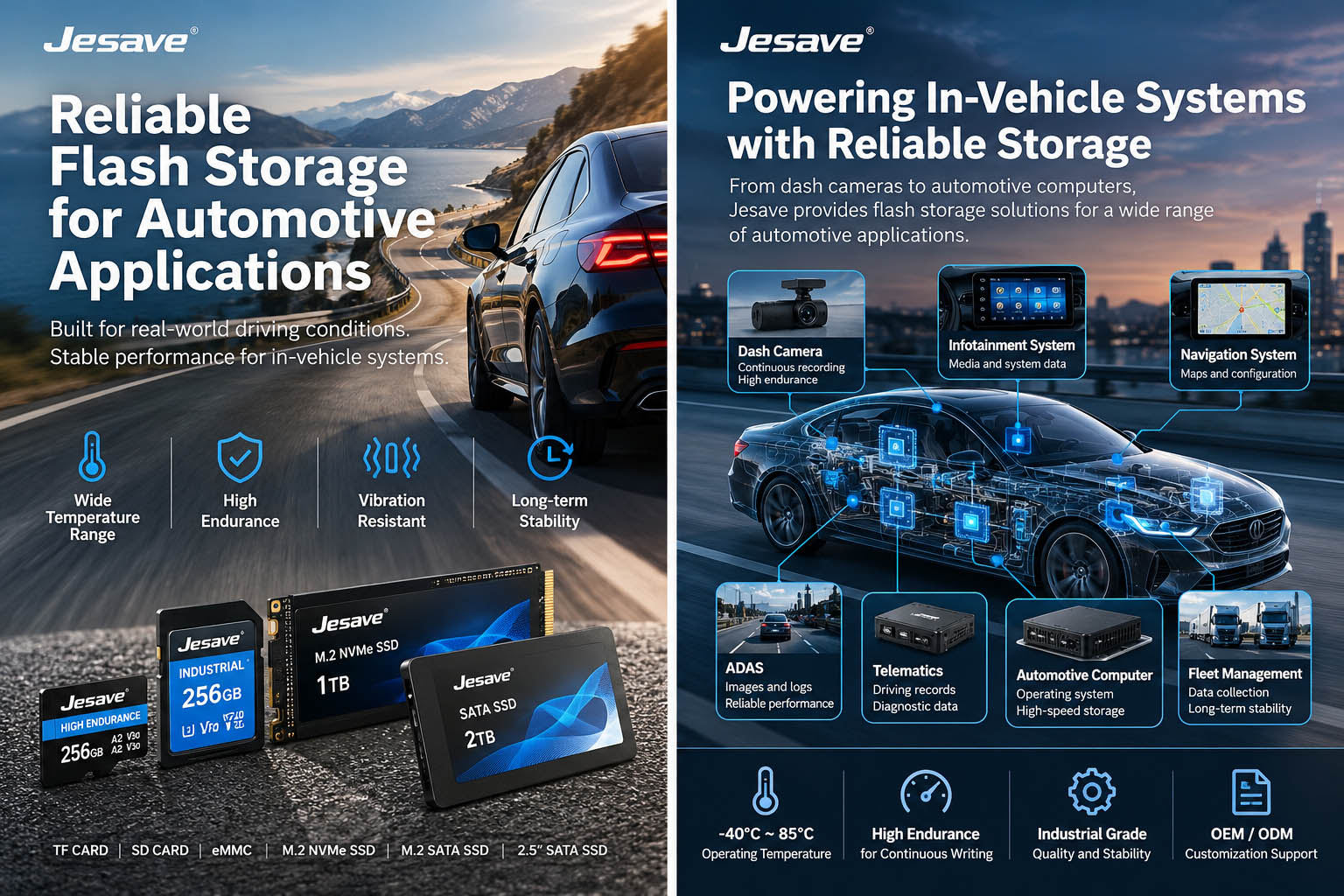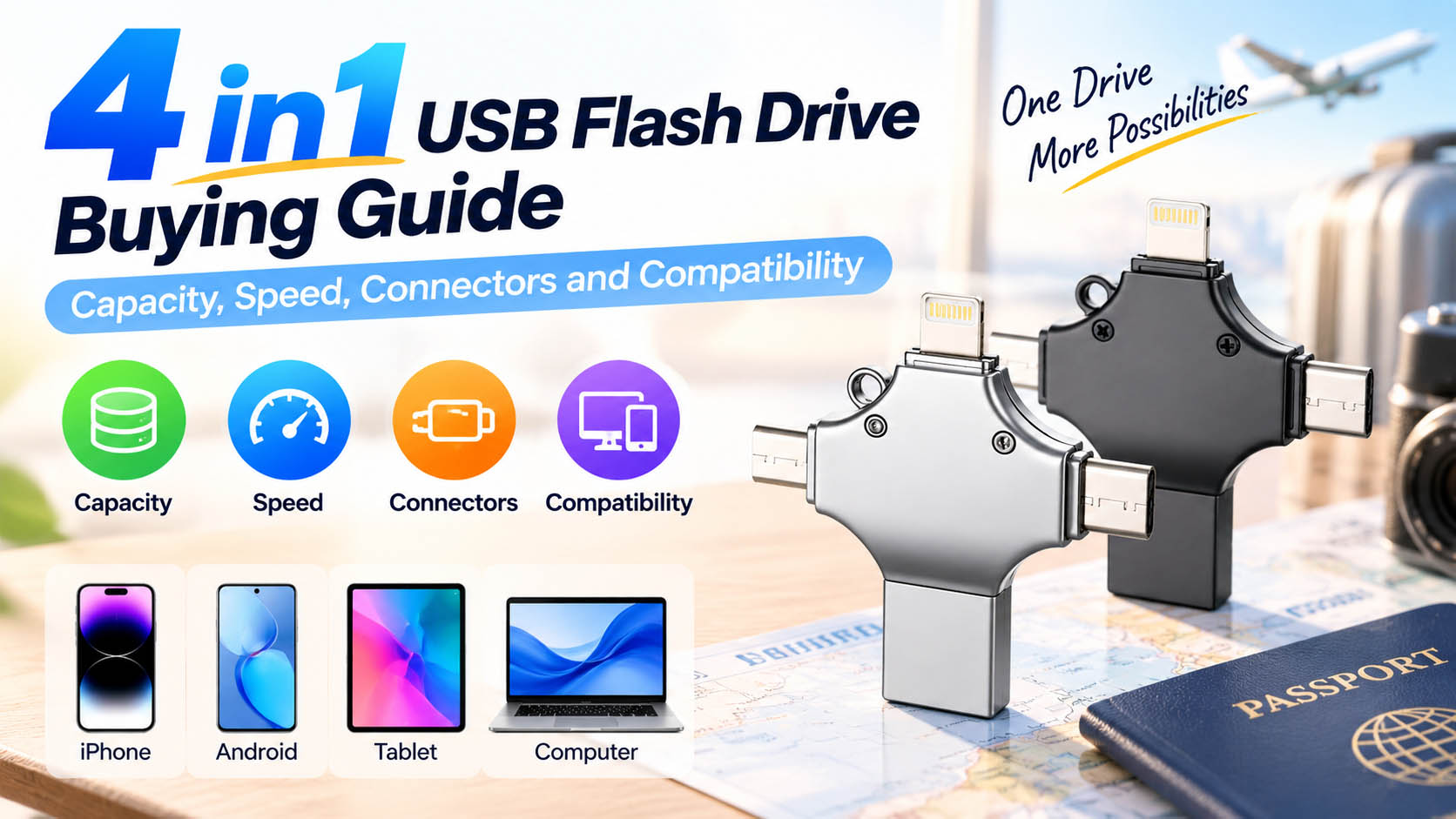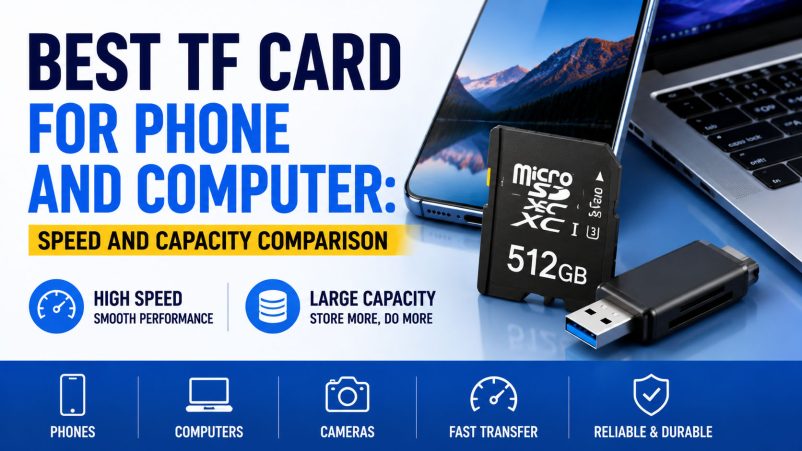
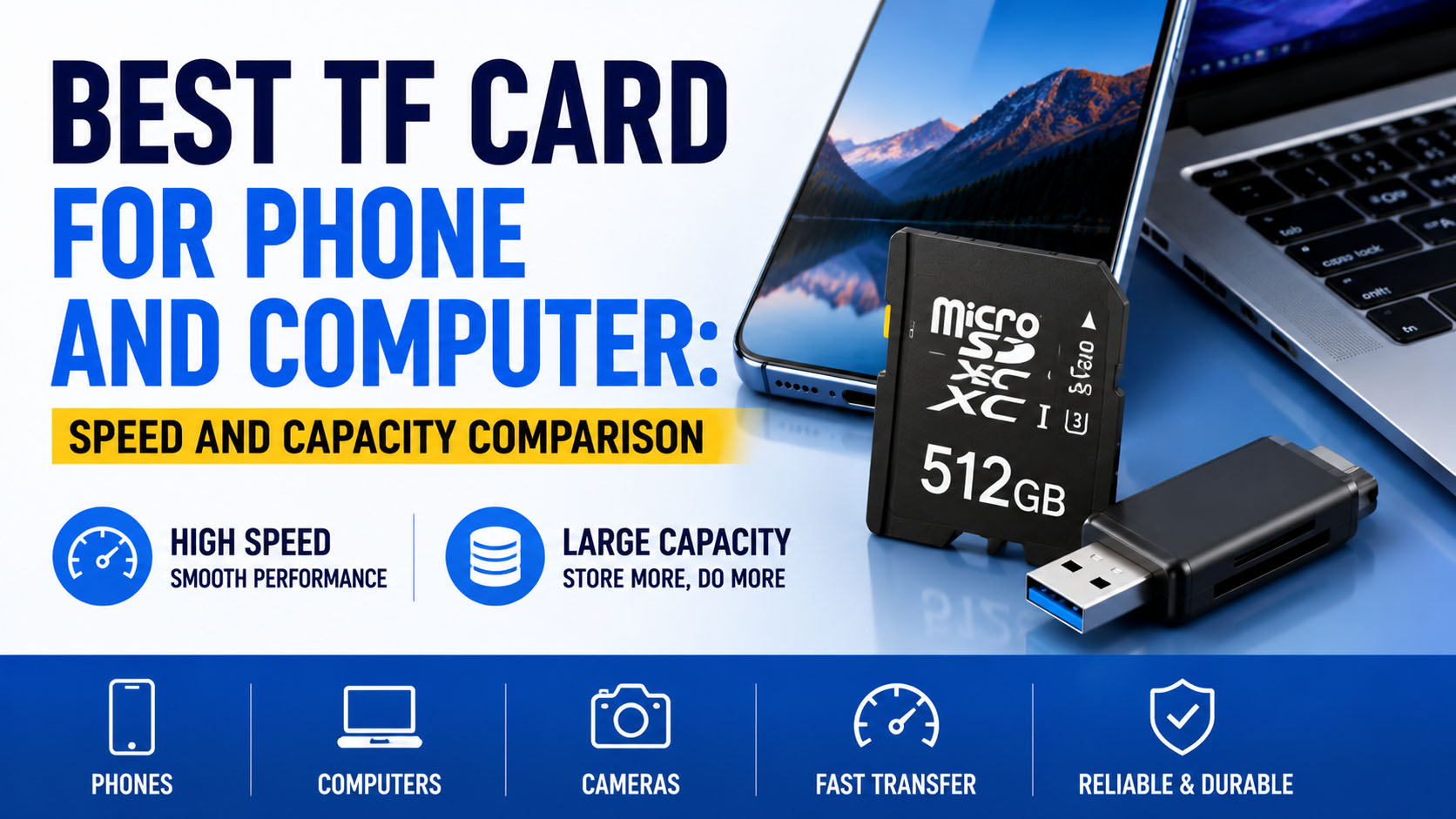
If you are looking for the best TF card for phone and computer, the most important factors are not simply the storage capacity or advertised peak speed. Compatibility, NAND flash quality, controller stability, speed class, endurance and supply reliability all affect the actual user experience.
In modern purchasing terminology, TF card generally refers to the microSD card format. For phones, tablets, cameras and computers, buyers should select the card according to the host device and application requirements.
TF Card vs. microSD Card: What’s the Difference?
TF, or TransFlash, was the original name for what is now standardized as microSD. Today, suppliers commonly use “TF card” and “microSD card” when referring to the same physical form factor.
The key specifications to compare are:
- Capacity: 64GB, 128GB, 256GB, 512GB, 1TB and more
- Speed class: C10, U1, U3, V30, V60, V90
- Bus interface: UHS-I, UHS-II, UHS-III or SD Express
- Application performance: A1/A2 for supported smartphone applications
- NAND and controller: Critical for consistency and long-term reliability
The SD Association defines SDXC as supporting capacities above 32GB up to 2TB, while newer SDUC standards extend beyond 2TB.
Best TF Card for Phone
For a smartphone that supports microSD expansion, 128GB, 256GB and 512GB are practical choices for photos, videos, music, documents and other files.
Recommended Selection
| Phone Application | Suggested Capacity | Key Consideration |
|---|---|---|
| Photos & music | 128GB–256GB | Stable everyday performance |
| Video & media | 256GB–512GB | Capacity + sustained write speed |
| Large media library | 512GB–1TB | Capacity + device compatibility |
| Apps on supported devices | 128GB+ | Consider A1/A2 |
| High-resolution video | 256GB+ | Match U3/V30 or higher if required |
For smartphones that use the card for applications, A1 and A2 Application Performance Classes are designed to address both random and sequential performance requirements.
Important: Not every smartphone supports expandable microSD storage. Always confirm the phone’s specifications before purchasing.
Best TF Card for Computer
A TF/microSD card can be used with a computer through a microSD-to-SD adapter, USB card reader or USB-C card reader.
For example:
TF Card → USB-C Card Reader → Laptop
or
TF Card → SD Adapter → Computer SD Slot
For large photo, video and document transfers, the actual performance depends on the memory card, card reader, USB interface and computer. A high-speed card cannot reach its rated potential if the host device or reader is slower.
The SD Association also notes that UHS and newer bus interfaces provide progressively higher transfer capabilities, while actual card performance depends on the card and host combination.
TF Card Speed Comparison
One of the biggest mistakes buyers make is comparing only the advertised read speed.
For applications such as video recording, sustained write performance is especially important. SD speed classes define minimum sequential performance under specified conditions.
| Speed Mark | Minimum-Class Performance | Typical Application |
|---|---|---|
| Class 10 | 10MB/s | Basic storage & Full HD |
| U1 | 10MB/s | Everyday phone storage |
| U3 | 30MB/s | Higher-performance recording |
| V30 | 30MB/s | 4K-oriented applications |
| V60 | 60MB/s | High-performance video |
| V90 | 90MB/s | Professional video |
For general phone and computer storage, Class 10/U1 may be sufficient. For higher-resolution video, U3/V30 or above may be appropriate depending on the device requirements.
Capacity vs. Speed: Which Matters More?
More capacity does not automatically mean higher performance.
A 512GB card provides more storage than a 256GB card, but the 256GB model may have better write performance depending on its NAND, controller and configuration.
For B2B buyers, the better approach is:
Application → Required capacity → Required speed → NAND/controller → Testing → Cost
What Makes a Reliable TF Card?
From a storage-industry perspective, a finished TF card is the result of several critical components working together.
1. NAND Flash
The NAND determines much of the card’s storage characteristics and influences performance, endurance and cost.
2. Controller
A suitable controller must be correctly matched with the NAND configuration and target application.
3. Firmware
Firmware optimization can affect compatibility, performance management and overall stability.
4. Testing
Professional suppliers should verify:
Capacity + Read/Write Speed + Compatibility + Error Rate + Long-Term Stability
This is particularly important for wholesale and OEM products, where inconsistent batches can create returns and after-sales problems.
Why Supply Chain Matters When Buying TF Cards
For consumers, price and specifications may be enough to make a purchase decision.
For wholesalers, distributors, retailers and electronics brands, supply-chain capability becomes equally important.
A professional memory-card manufacturer can integrate:
NAND Sourcing → Controller Matching → Firmware → Assembly → Capacity Testing → Speed Testing → QC → Packaging
A stable supply chain can provide:
- More consistent component quality
- Flexible capacity options
- Better production planning
- Competitive bulk pricing
- Stable delivery schedules
- Consistent performance between batches
For recurring procurement, this can be more valuable than choosing a supplier based solely on the lowest unit price.
OEM & ODM TF Card Manufacturing
Brands that want to develop their own storage products can work with an OEM/ODM TF card manufacturer instead of purchasing generic retail products.
Typical customization includes:
Capacity · Logo · Card Label · Product Appearance · Packaging · Barcode · Retail Box · Specification Configuration
For example, a consumer-electronics brand could develop:
- Private-label 128GB TF cards
- Branded 256GB microSD cards
- High-speed 512GB TF cards
- Custom gaming memory cards
- TF cards bundled with USB-C card readers
A complete OEM workflow can cover:
Requirement → Sample → Testing → Specification Confirmation → Mass Production → QC → Packaging → Shipment
This reduces the need for brands to manage multiple suppliers.
How to Choose the Best TF Card
For Phone
Choose a compatible microSD/TF card with the required capacity and application performance. For supported smartphones, A1/A2 can be considered when running apps from the card.
For Computer
Focus on capacity + sequential read/write performance + card-reader interface.
For Video
Prioritize sustained write performance and the required U3/V30/V60/V90 class, according to the camera or recording device.
For Wholesale
Look beyond price. Evaluate NAND source, controller solution, testing capability, MOQ, delivery stability and after-sales support.
For Private Label
Choose an OEM/ODM manufacturer capable of handling product customization, packaging and consistent mass production.
FAQ
Is a TF card the same as a microSD card?
Yes. TF is the earlier TransFlash terminology, while microSD is the standardized name used today.
What is the best TF card capacity for a phone?
For many applications, 128GB–512GB provides a practical balance between capacity and cost. Heavy users may consider 1TB if the device supports it.
Is 512GB better than 256GB?
It provides more storage, but not necessarily better speed or reliability. Capacity and performance are separate specifications.
Is U3 better than U1?
U3 specifies a higher minimum sequential write performance than U1 under the relevant SD standard conditions. Choose according to the host device and application requirements.
Can I use a TF card on a computer?
Yes. A microSD/TF card can be connected through a compatible SD adapter, USB reader or USB-C card reader.
Final Takeaway
The best TF card for phone and computer is not simply the card with the largest capacity or highest advertised read speed.
For end users, focus on:
Compatibility + Capacity + Speed
For professional buyers, add:
NAND Quality + Controller Stability + Testing + Supply Chain + OEM Capability
A storage manufacturer with strong NAND and controller sourcing, professional testing, stable production capacity and OEM/ODM expertise can provide more than a standard TF card. It can provide a complete, scalable storage solution—from component sourcing and product specification to customized packaging and mass production.
The right TF card is the right balance of performance, capacity, reliability and supply-chain value.