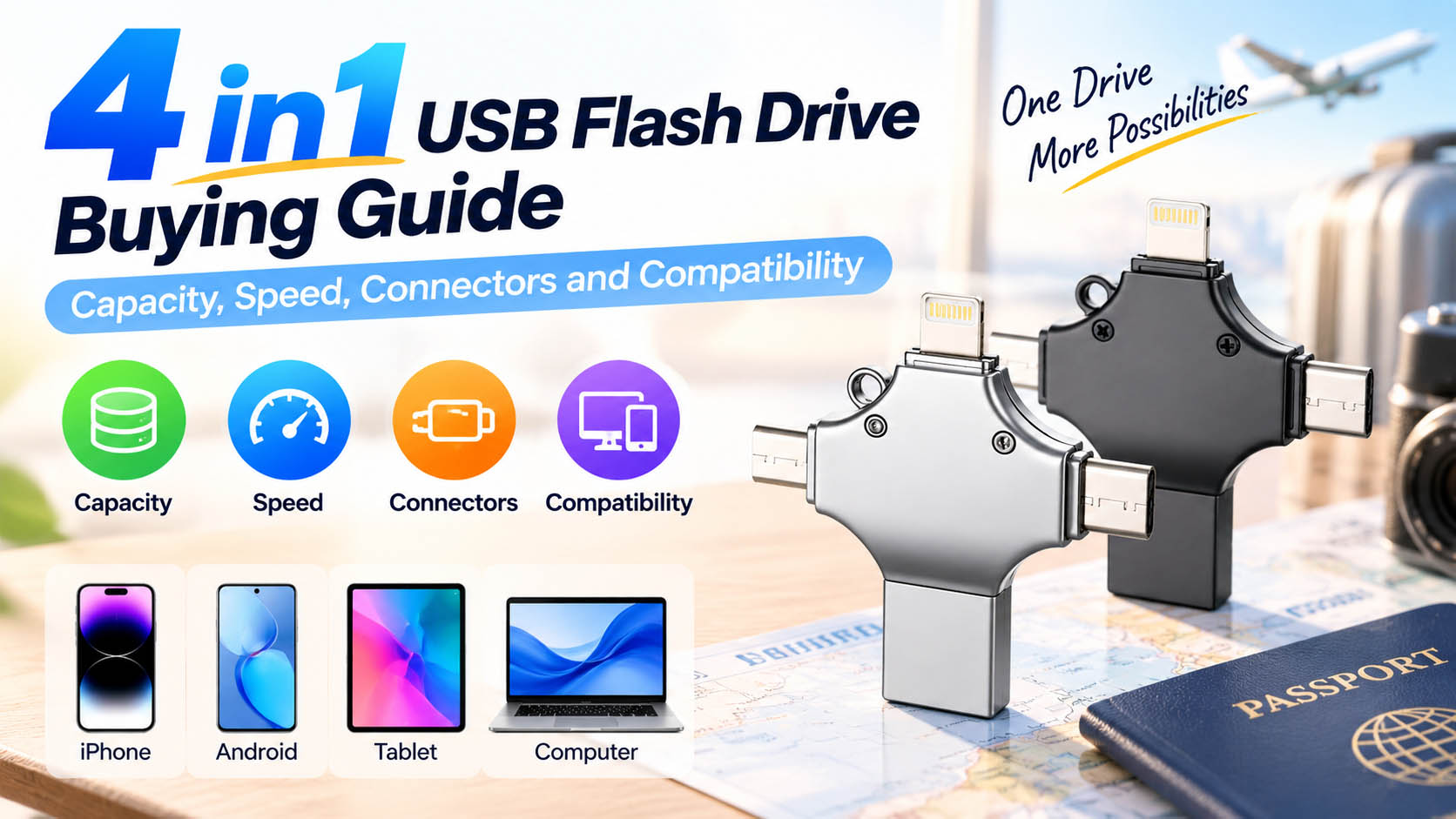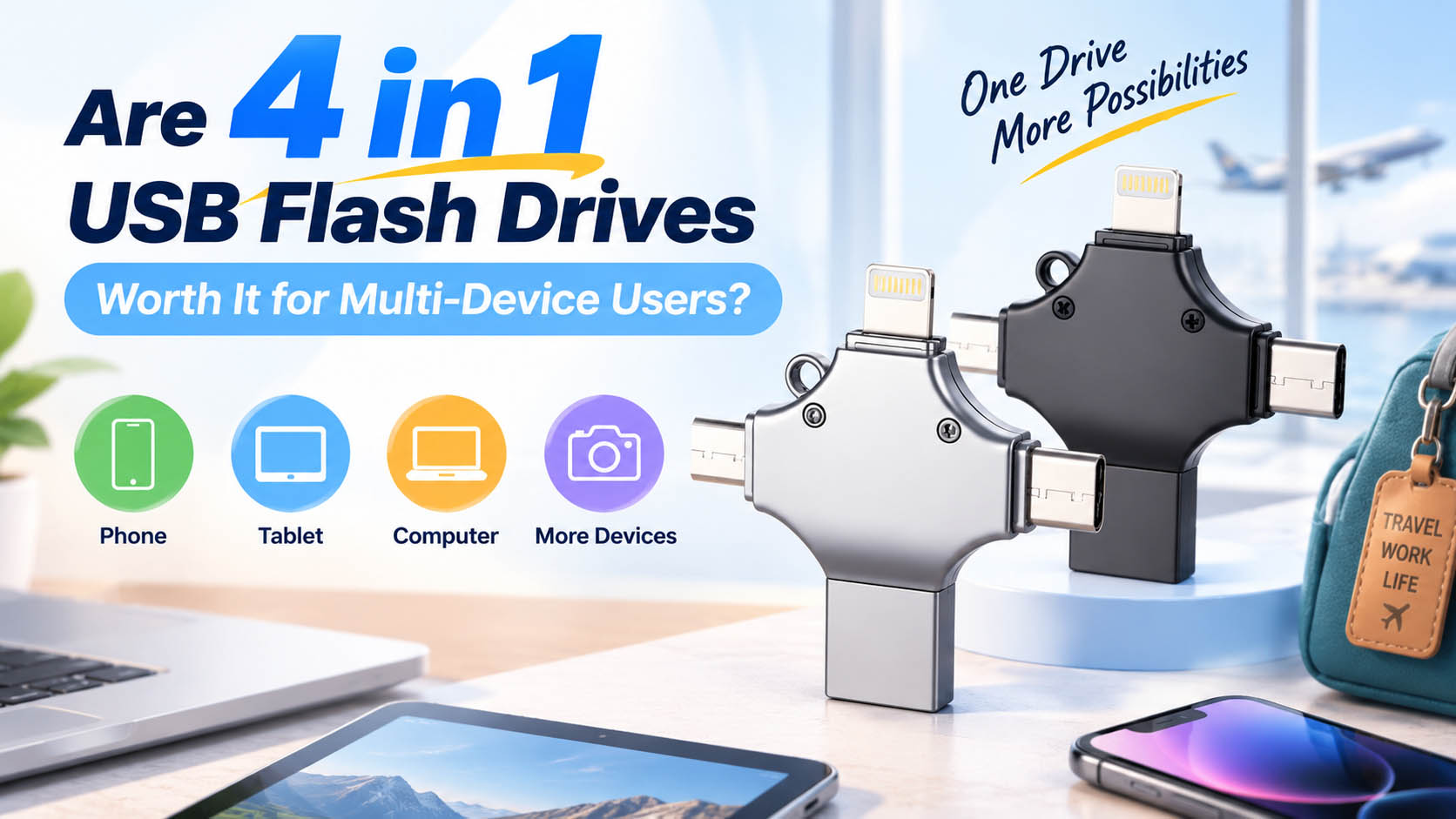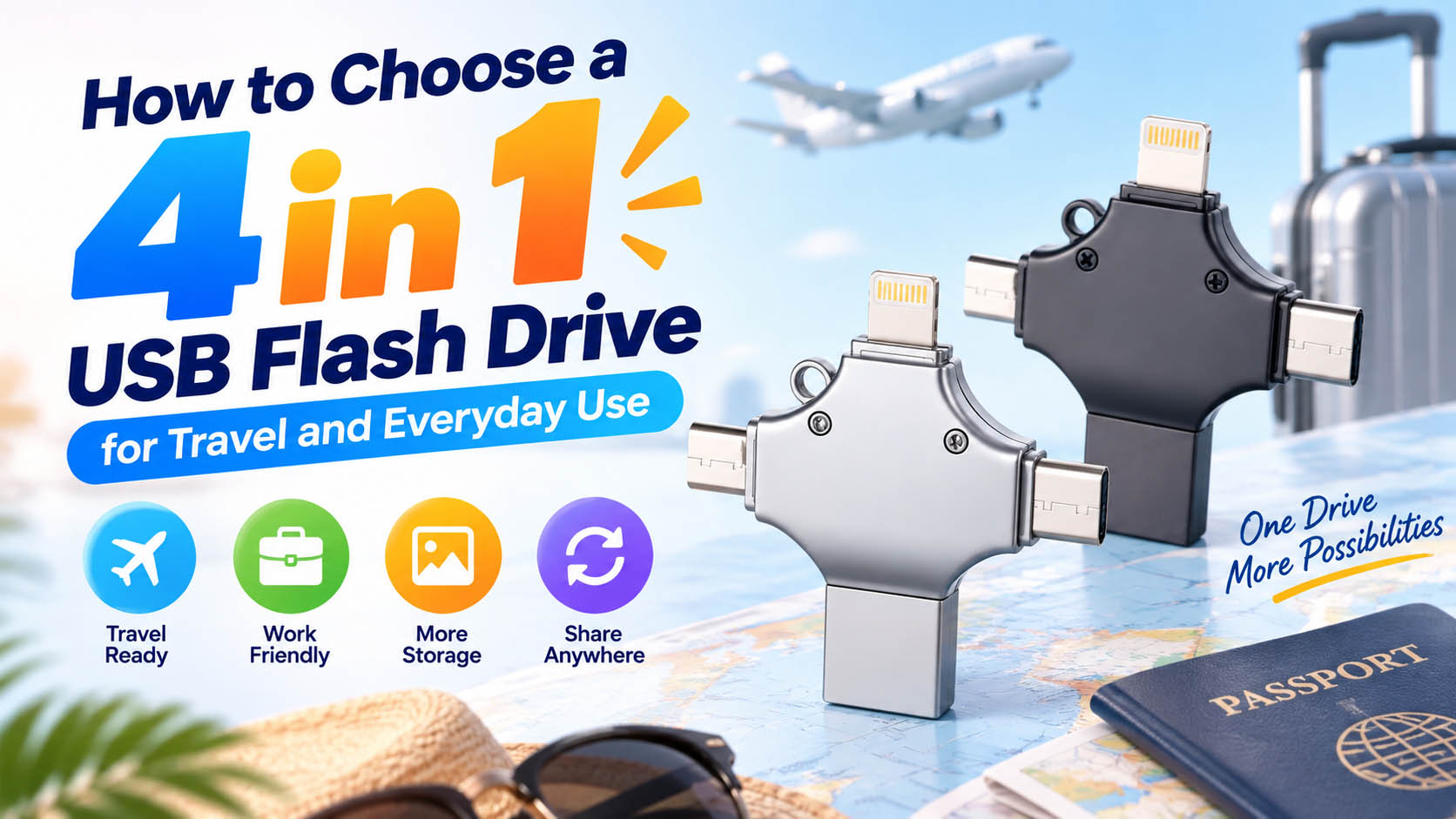
Choosing the right USB flash drive is not just about capacity and price. For reliable storage, buyers should compare NAND flash, controller, real-world speed, interface, compatibility, durability, quality control, and supplier stability.
For B2B purchasing, OEM/ODM capability and long-term supply are also important.
USB Flash Drive Buying Checklist
| Factor | What to Look For | Priority |
|---|---|---|
| Capacity | 32GB–1TB+ | ★★★★★ |
| NAND Flash | Verified, suitable NAND | ★★★★★ |
| Controller | Stable NAND-controller matching | ★★★★★ |
| Read Speed | Real tested performance | ★★★★☆ |
| Write Speed | Sustained write performance | ★★★★★ |
| Interface | USB-A / USB-C / Dual | ★★★★★ |
| File System | exFAT for broad compatibility | ★★★★☆ |
| Durability | Reliable housing & connector | ★★★★☆ |
| Data Security | Encryption if required | ★★★★☆ |
| Warranty / QC | Clear quality standards | ★★★★★ |
| Supply Stability | Consistent components | ★★★★★ |
| OEM/ODM | Custom branding & specifications | ★★★★☆ |
1. Choose the Right Capacity
| Capacity | Typical Application |
|---|---|
| 32GB | Documents, promotional use |
| 64GB | Documents + photos |
| 128GB | Photos + videos |
| 256GB | Large projects |
| 512GB | Professional media |
| 1TB+ | Large data archives |
Tip: Choose capacity according to actual workload rather than buying the largest capacity available.
2. Check NAND Flash Quality
NAND is the core storage component of a USB flash drive.
| NAND Type | General Characteristics | Positioning |
|---|---|---|
| SLC | High endurance, high cost | Specialized |
| MLC | High endurance | Professional |
| TLC | Cost/performance balance | Mainstream |
| QLC | High density, cost focused | Capacity-oriented |
For most commercial USB flash drives, TLC offers a practical balance of capacity, performance, endurance, and cost, depending on the workload.
3. Pay Attention to the Controller
The controller manages communication between the USB interface and NAND flash.
| Controller Function | Why It Matters |
|---|---|
| Flash Management | Storage stability |
| ECC | Error correction |
| Wear Management | NAND endurance |
| Performance Control | Transfer consistency |
| Compatibility | Device support |
| Firmware Management | Overall operation |
A good NAND + controller match is more important than simply choosing a high-speed USB label.
4. Compare Real Read and Write Speed
Advertised speed and actual performance are not always the same.
| Speed Specification | Importance |
|---|---|
| Sequential Read | ★★★★☆ |
| Sequential Write | ★★★★★ |
| Sustained Write | ★★★★★ |
| Small File Performance | ★★★★☆ |
| Real-World Testing | ★★★★★ |
For large videos, backups, and professional files, sustained write speed deserves particular attention.
5. Choose the Right USB Interface
| Interface | Recommended For |
|---|---|
| USB-A | Traditional computers |
| USB-C | Modern laptops, tablets, phones |
| USB-A + USB-C | Multi-device users |
| USB 2.0 | Basic storage |
| USB 3.x | Faster file transfer |
USB-C is increasingly useful for modern devices, while dual USB-A + USB-C drives provide broader compatibility.
6. Consider Data Security
If the USB drive will store sensitive information, security should be part of the specification.
| Security Option | Application |
|---|---|
| Standard USB | General files |
| Password-Protected Files | Personal data |
| Software Encryption | General security |
| Hardware Encryption | Business / enterprise |
| Authentication | Confidential information |
For sensitive business data, an encrypted USB flash drive is generally preferable to an unprotected standard drive.
7. Check Durability
| Feature | Benefit |
|---|---|
| Metal Housing | Better physical protection |
| Reinforced Connector | Improved durability |
| Compact Design | Easy portability |
| Dust Resistance | Better environmental protection |
| Heat Management | Improved stability |
For frequent transportation, choose a housing and connector designed for repeated use.
8. Verify the Actual Capacity
Capacity verification is especially important for B2B purchasing.
| Test | Purpose |
|---|---|
| Capacity Test | Verify actual storage |
| Read Test | Check data retrieval |
| Write Test | Check recording |
| Speed Test | Verify performance |
| Bad Block Check | Identify potential issues |
| Batch QC | Maintain consistency |
Avoid suppliers that provide only a capacity label without actual product testing.
Supply Chain Advantages for B2B Buyers
For distributors, wholesalers, and brands, supplier capability can directly affect product quality and delivery.
| Supply Chain Capability | Buyer Benefit |
|---|---|
| Stable NAND Sourcing | Consistent quality |
| Multiple NAND Options | Flexible pricing |
| Controller Selection | Application optimization |
| NAND-Controller Matching | Better stability |
| Factory Testing | Lower defect risk |
| Capacity Verification | Reliable capacity |
| Batch Traceability | Better QC |
| Component Alternatives | Lower supply risk |
| Stable Production | Reliable repeat orders |
An experienced storage supplier can manage:
NAND → Controller → PCB → Assembly → Testing → Packaging → Delivery
OEM & ODM USB Flash Drive Options
For brands and B2B projects, OEM/ODM flexibility can be as important as the hardware.
| OEM / ODM Option | Customization |
|---|---|
| Logo | Printing / Laser engraving |
| Housing | Standard / Custom |
| Color | Custom |
| Capacity | 32GB–1TB+ depending on platform |
| Interface | USB-A / USB-C / Dual |
| Encryption | Product-specific |
| Packaging | Retail / B2B |
| Data Preloading | Project dependent |
| QC Standards | Customer-defined |
OEM buyers can combine storage specifications + industrial design + branding + packaging + QC requirements into one product.
Standard vs Premium USB Flash Drive
| Factor | Budget Model | Premium Model |
|---|---|---|
| NAND | Cost-focused | Higher consistency |
| Controller | Basic | Optimized |
| Write Speed | Lower | Higher |
| Sustained Performance | Limited | Better |
| Housing | Standard | More durable |
| Testing | Basic | More comprehensive |
| Price | Lower | Higher |
| Best For | Basic files | Frequent / demanding use |
Best value does not always mean the lowest unit price. Consider total performance, reliability, return rate, and long-term supply.
How to Choose a USB Flash Drive by Application
| Application | Recommended Configuration |
|---|---|
| Documents | 32–64GB, USB 2.0/3.x |
| Photos | 64–128GB, USB 3.x |
| Video | 128GB+, faster write speed |
| Computer Backup | 128–512GB |
| Phone Storage | USB-C |
| Business Files | USB 3.x + quality NAND |
| Confidential Data | Encrypted USB |
| Promotional Products | Cost-focused + OEM |
| Enterprise Projects | Customized security + QC |
Questions to Ask a USB Flash Drive Supplier
| Question | Why It Matters |
|---|---|
| What NAND is used? | Assess storage quality |
| Which controller? | Evaluate stability |
| What are the real read/write speeds? | Avoid misleading specifications |
| Is sustained write tested? | Important for large files |
| Is actual capacity verified? | Confirm storage |
| What QC tests are performed? | Evaluate reliability |
| What is the MOQ? | Purchasing planning |
| Can you provide samples? | Pre-production verification |
| Can you support OEM/ODM? | Brand customization |
| Is component supply stable? | Long-term purchasing |
| What is the lead time? | Delivery planning |
FAQ
What is the most important thing when buying a USB flash drive?
For general buyers, focus on capacity, interface, real write speed, NAND quality, and reliability. For B2B buyers, also evaluate QC and supply stability.
Is a more expensive USB flash drive always better?
No. The right drive depends on the application. A premium model is worthwhile when you need higher sustained performance, durability, or security.
Is USB-C better than USB-A?
Neither is universally better. USB-C is better for many modern devices, while USB-A remains widely compatible. Dual-interface models offer the most flexibility.
Which NAND is best for a USB flash drive?
There is no single best NAND for every application. TLC is a common balance of cost, capacity, performance, and endurance, while specialized applications may require other NAND types.
What is more important: read speed or write speed?
For transferring files to the USB drive and creating backups, write speed is particularly important. For copying files from the drive, read speed matters more.
Should I buy an encrypted USB flash drive?
If you store confidential business, financial, customer, or sensitive personal information, encryption is recommended.
Can USB flash drives be OEM customized?
Yes. Depending on the platform, OEM/ODM manufacturers can customize capacity, NAND, controller, USB interface, housing, color, logo, encryption, packaging, and QC requirements.
What makes a good B2B USB flash drive supplier?
Look for stable NAND sourcing, reliable controller platforms, actual capacity verification, factory testing, consistent production, flexible OEM/ODM capabilities, and long-term supply stability.
Final Takeaway
When buying a USB flash drive, use this simple formula:
Right Capacity + Quality NAND + Suitable Controller + Real Speed + Correct Interface + Reliable QC
For B2B purchasing, add:
Stable Supply Chain + OEM/ODM Capability + Consistent Quality
The best USB flash drive is not simply the cheapest or fastest—it is the one that matches your application, quality requirements, budget, and long-term supply needs.