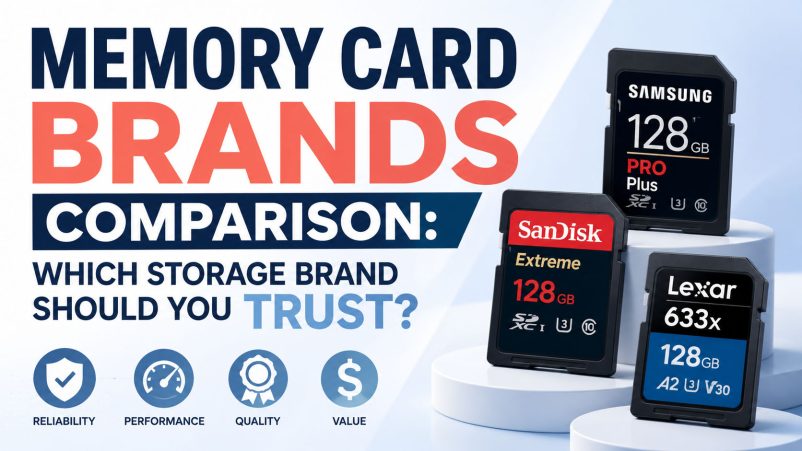
Choosing the right memory card brand is not simply about finding the highest advertised read speed or the lowest price. For consumers, the decision may come down to compatibility and performance. For distributors, retailers, electronics manufacturers, and OEM buyers, a reliable memory card brand must also provide consistent quality, stable supply, competitive pricing, product customization, and long-term sourcing support.
So, which memory card brand should you trust?
The short answer is: there is no single best memory card brand for every application. The right choice depends on the device, required performance, data reliability, target price, supply stability, and purchasing model.
For professional procurement, the better question is often not simply “Which brand is best?” but “Which memory card supplier can consistently deliver the specifications, quality, price, and customization my business needs?”
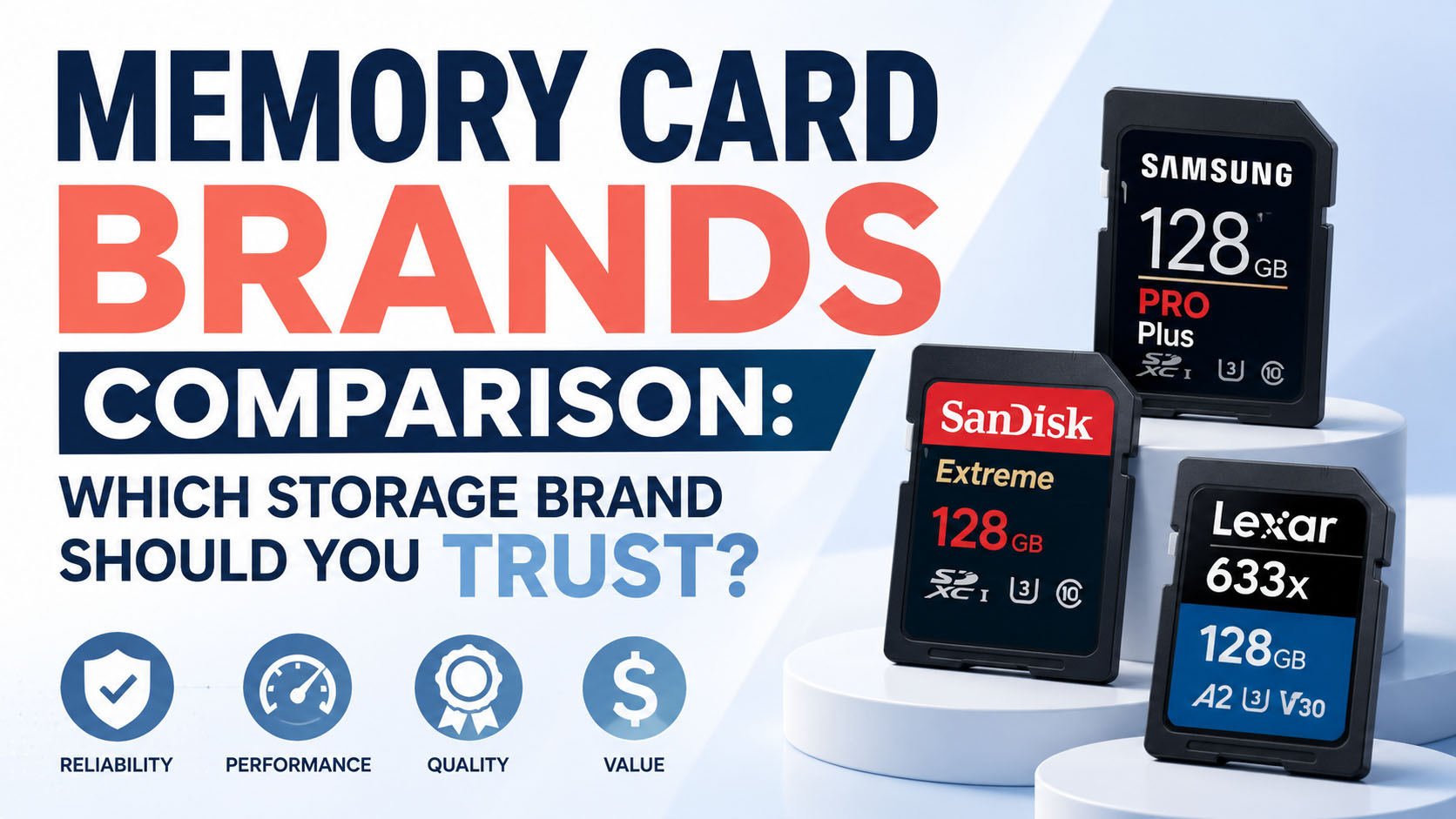
Memory Card Brands Comparison at a Glance
Well-known storage brands such as SanDisk, Samsung, and Lexar have extensive memory card portfolios covering consumer, professional, gaming, surveillance, mobile, and high-performance applications. Their product lines also demonstrate an important industry principle: different applications require different levels of memory card performance.
| Brand / Supplier Type | Main Strength | Typical Applications | Best For |
|---|---|---|---|
| SanDisk | Broad product range and strong consumer recognition | Cameras, smartphones, gaming, video | Consumer & professional users |
| Samsung | Flash-memory technology and high-performance storage | Cameras, dash cams, gaming, mobile devices | Performance-focused users |
| Lexar | Broad storage portfolio and professional solutions | Cameras, drones, gaming, mobile devices | Professional & mainstream users |
| OEM / Private Label Supplier | Flexible customization and factory sourcing | Retail brands, electronics, distributors | B2B & brand owners |
The important point for buyers is that brand reputation is only one part of the purchasing decision. Product specification, batch consistency, compatibility, testing standards, and supply-chain capability can be equally important.
What Makes a Memory Card Brand Trustworthy?
A trustworthy memory card brand or supplier should be evaluated across several dimensions rather than by marketing claims alone.
1. Stable Memory Flash Supply
NAND flash is the core storage component of a memory card. Its quality, availability, and consistency directly influence product performance and lifecycle.
For B2B buyers, a stable upstream supply chain can help reduce:
- Batch-to-batch performance differences
- Unexpected price fluctuations
- Production delays
- Product shortages
- Quality-control problems
This is one reason experienced storage manufacturers place significant emphasis on supply-chain management rather than simply assembling memory cards.
Lexar, for example, publicly highlights its supply-chain capabilities as part of its storage business.
2. Controller and Firmware Matching
A memory card is more than NAND flash.
The controller and firmware determine how the card manages:
- Data transfer
- Error correction
- Wear leveling
- Bad-block management
- Read/write operations
- Compatibility with host devices
Two cards with the same 128GB capacity can therefore deliver very different real-world experiences.
For OEM buyers, controller and NAND matching becomes especially important because the goal is not merely to achieve a high peak speed, but to maintain stable performance across production batches.
3. Sustained Write Performance
One of the biggest mistakes when comparing memory cards is looking only at the maximum read speed.
For cameras, drones, dash cams, surveillance systems, and other recording devices, sustained write performance can be more important.
The SD Association defines multiple speed classifications, including Speed Class, UHS Speed Class, and Video Speed Class. Video Speed Class includes V6, V10, V30, V60, and V90 categories designed for different recording requirements.
For example:
- Everyday storage → standard Class 10 / UHS-I options may be sufficient
- 4K recording → a suitable U3 or V30-class card may be required
- Professional high-bitrate video → V60 or V90-class products may be more appropriate
The correct choice should always match the device manufacturer’s requirements.
SanDisk vs Samsung vs Lexar: What Is the Difference?
SanDisk Memory Cards
SanDisk has one of the most recognizable memory card portfolios in the consumer storage market.
Its product range covers everyday cards as well as higher-performance products for cameras, action cameras, gaming devices, and professional video applications. SanDisk also publishes compatibility and performance information for its SD and microSD products.
Best suited for:
- Consumer electronics
- Smartphones
- Cameras
- Action cameras
- Gaming devices
- Professional photography and video
For buyers searching for SanDisk alternatives, wholesale memory cards, or private label SD cards, the key consideration is not simply matching the brand name. The alternative should match the required capacity, speed class, NAND quality, controller configuration, and reliability level.
Samsung Memory Cards
Samsung is a major semiconductor and storage technology company with a broad memory-storage portfolio.
Its current SD and microSD products target applications including high-resolution video, dash cameras, gaming consoles, and other high-capacity devices. Samsung’s PRO Ultimate product family, for example, offers high read/write performance and 4K UHD recording support.
Best suited for:
- High-performance consumer devices
- Dash cams
- Cameras
- Gaming
- High-resolution video
- Users who prioritize established semiconductor technology
For B2B procurement, Samsung-level performance specifications can also serve as a useful benchmark when evaluating alternative memory card suppliers.
Lexar Memory Cards
Lexar has a broad storage portfolio covering SD, microSD, CFexpress, portable SSDs, USB flash drives, and other memory products.
The brand also operates quality-testing programs for storage products. Its published product information emphasizes compatibility, performance, and reliability testing across a large number of digital devices.
Lexar’s current product portfolio includes mainstream and professional memory cards with different performance levels, demonstrating that even within one trusted brand, the right card depends on the application.
Best suited for:
- Photography
- Videography
- Drones
- Action cameras
- Mobile devices
- Gaming
- Professional storage applications
Does a Famous Memory Card Brand Always Mean Better Value?
Not necessarily.
A well-known brand can provide advantages such as:
- Strong consumer recognition
- Established product testing
- Mature support systems
- Extensive compatibility information
- Global distribution
However, B2B buyers have additional requirements.
A retailer purchasing 500 cards has different priorities from a manufacturer purchasing 50,000 cards for integration into an electronic device.
For bulk purchasing, buyers should evaluate:
Unit price + quality consistency + failure rate + testing + lead time + customization + after-sales support
rather than unit price alone.
This is where a professional OEM memory card manufacturer can create significant value.
OEM Memory Card vs Branded Memory Card: Which Is Better for Businesses?
For consumers, purchasing a well-known retail brand is often the simplest solution.
For businesses, however, OEM and private-label memory cards can offer greater flexibility.
An experienced OEM memory card supplier may provide:
- Custom logo printing
- Custom card design
- Private-label packaging
- Customized capacity options
- Customized product specifications
- Retail packaging
- User manuals
- Barcode and labeling solutions
- Batch testing
- Customized inspection requirements
This makes OEM memory cards particularly attractive to:
- Electronics brands
- Distributors
- Wholesalers
- Retail chains
- Security equipment companies
- Camera accessory brands
- IoT manufacturers
- Industrial equipment manufacturers
Why Supply Chain Advantage Matters in Memory Card Procurement
For large-volume buyers, supply-chain capability can be more important than brand recognition.
An experienced memory card manufacturer can integrate several stages of the supply process, including:
NAND sourcing → controller matching → firmware configuration → production → capacity testing → speed testing → quality inspection → packaging → shipment
This integrated approach can improve:
Cost Control
Direct and stable sourcing can help manufacturers offer more competitive pricing for bulk memory card orders.
Batch Consistency
Professional testing helps maintain consistent capacity and performance between production batches.
Production Flexibility
OEM buyers can request different configurations for different markets instead of purchasing only standard retail products.
Faster Product Development
A capable supplier can help customers select appropriate capacities, speed classes, card formats, packaging, and application-specific solutions.
What Should Wholesale Buyers Search for When Sourcing Memory Cards?
B2B buyers often do not search using only “memory card.”
They usually combine product + specification + purchasing intent + supplier type.
High-intent search terms include:
- wholesale memory card supplier
- bulk memory card supplier
- memory card manufacturer
- SD card manufacturer
- micro SD card manufacturer
- OEM memory card manufacturer
- private label memory card supplier
- custom memory card manufacturer
- OEM micro SD card supplier
- wholesale micro SD card
- bulk SD card supplier
- memory card factory China
- SD card OEM supplier
- private label micro SD card
- high endurance micro SD card supplier
- industrial micro SD card manufacturer
- 128GB micro SD card wholesale
- 256GB micro SD card supplier
- 512GB micro SD card wholesale
- Class 10 memory card supplier
- UHS-I memory card manufacturer
For procurement teams, these keywords are more valuable than generic searches because they indicate a specific purchasing requirement.
How to Choose a Reliable Memory Card Supplier
Whether you are buying branded products or developing your own private-label memory card, use this checklist.
Check 1: Product Specifications
Confirm:
- Capacity
- Read speed
- Write speed
- Sustained write performance
- Speed Class
- UHS specification
- Video Speed Class
- Application Performance Class
- Operating temperature
Do not select a card simply because the package displays a large “200MB/s” or “180MB/s” number.
Check 2: Device Compatibility
Always confirm compatibility with the target device.
A memory card designed for a smartphone may not be the best option for a professional camera or continuous-recording surveillance system.
SanDisk’s compatibility documentation, for example, specifically emphasizes matching card specifications with the camera and checking critical speed specifications, including sustained write performance.
Check 3: NAND Flash and Controller Quality
For B2B procurement, ask the supplier about:
- NAND source
- Controller solution
- Firmware
- Capacity testing
- Speed testing
- Bad-block management
- Quality-control procedures
These questions help distinguish a professional storage supplier from a simple trading company.
Check 4: OEM Capability
If you plan to build your own brand, confirm whether the supplier supports:
- Logo customization
- Packaging customization
- Private labeling
- Product customization
- Sample development
- Small-batch testing
- Mass production
- Quality inspection
- Long-term supply
An OEM supplier should be able to support your product from sample stage to commercial production.
Which Memory Card Is Best for Different Applications?
There is no universal “best memory card.”
For Smartphones and Tablets
Focus on:
- Capacity
- Application performance
- Compatibility
- Price-performance ratio
For Cameras
Focus on:
- Sustained write speed
- UHS interface
- V30 / V60 / V90 requirements
- Capacity
- Camera compatibility
For Dash Cams
Focus on:
- High endurance
- Continuous recording capability
- Temperature resistance
- Stable write performance
Samsung, for example, specifically positions its SD and microSD cards for dash cams and high-resolution recording applications.
For Drones and Action Cameras
Focus on:
- Sustained write performance
- High-speed transfer
- Capacity
- Device compatibility
- Temperature and durability requirements
For Surveillance Systems
Focus on:
- High endurance
- Continuous writing
- Stable performance
- Long service life
For Industrial Equipment
Focus on:
- Industrial-grade components
- Wide operating temperature
- Long-term availability
- Data reliability
- Supply continuity
Brand Reputation vs OEM Manufacturing: Which Matters More?
For retail consumers, brand reputation is often the easiest way to reduce purchasing risk.
For professional buyers, manufacturing capability and supply-chain reliability can become equally important.
A strong OEM memory card manufacturer can provide a combination of:
Competitive factory pricing + stable NAND supply + strict quality testing + flexible customization + consistent mass production
This is particularly valuable for companies that want to create their own memory card brand rather than resell another company’s retail products.
In other words:
A trusted brand is valuable for consumer confidence, while a capable OEM supplier is valuable for long-term business growth.
What Is the Best Memory Card Brand for Wholesale Buyers?
There is no single answer.
For wholesale buyers, the best supplier is the one that can consistently meet your:
- Target price
- Required capacity
- Speed requirements
- Quality standard
- Order quantity
- Delivery schedule
- Packaging requirements
- OEM requirements
- Market-specific specifications
A supplier offering the cheapest 128GB microSD card may not be the best choice if its quality varies between batches.
Likewise, the most expensive branded memory card may not provide the best margin for a distributor.
The strongest sourcing strategy is to evaluate quality, price, supply stability, and customization together.
How to Compare Memory Card Brands Before Placing a Bulk Order
A professional purchasing process can follow five steps:
Step 1: Define the Application
Identify whether the card will be used for:
- Cameras
- Drones
- Smartphones
- Gaming
- Dash cams
- Surveillance
- Industrial equipment
- General consumer electronics
Step 2: Define the Required Specification
Determine:
- 32GB / 64GB / 128GB / 256GB / 512GB / 1TB
- SD or microSD
- UHS-I or UHS-II
- U1 or U3
- V30 / V60 / V90
- Standard or high endurance
Step 3: Compare Samples
Test several suppliers under the same conditions.
Evaluate:
- Actual capacity
- Sequential read speed
- Sequential write speed
- Sustained write performance
- Random performance
- Temperature behavior
- Device compatibility
Step 4: Evaluate the Supplier
Ask about:
- Factory experience
- NAND sourcing
- Quality control
- OEM capability
- Production capacity
- Lead time
- Warranty
- After-sales support
Step 5: Start With a Trial Order
Before committing to large-scale procurement, use a trial order to verify:
sample quality → production consistency → packaging → delivery → after-sales response
This reduces procurement risk significantly.
Frequently Asked Questions About Memory Card Brands
What is the most reliable memory card brand?
SanDisk, Samsung, and Lexar are all established storage brands with broad memory card portfolios. However, reliability should be evaluated at the specific product level, not only by brand name.
Is SanDisk better than Samsung?
Neither is universally better. The right choice depends on the application, required speed, capacity, device compatibility, and price.
Is Lexar a reliable memory card brand?
Lexar offers a broad range of consumer and professional memory cards and states that its products undergo extensive compatibility and quality testing.
What should I look for when buying wholesale memory cards?
Focus on NAND quality, controller configuration, actual capacity, sustained write performance, testing standards, batch consistency, supply stability, price, and OEM capability.
Can I buy OEM memory cards with my own brand?
Yes. Professional OEM memory card manufacturers can provide private-label cards with customized logos, packaging, specifications, and branding.
Is a branded memory card always better than an OEM memory card?
Not necessarily. A high-quality OEM memory card can be an attractive solution for distributors and brands when the manufacturer has reliable component sourcing, strict testing, stable production, and strong quality control.
Final Verdict: Which Storage Brand Should You Trust?
The best memory card brand is not necessarily the brand with the biggest name or the highest advertised speed.
For consumers, established brands such as SanDisk, Samsung, and Lexar provide strong options across different applications. Their product portfolios show why buyers should choose memory cards according to actual usage requirements rather than relying only on capacity or headline speed.
For wholesalers, distributors, electronics manufacturers, and private-label brands, however, the purchasing decision goes further.
The most valuable supplier is one that combines:
Reliable NAND sourcing + stable supply chain + strict quality control + competitive factory pricing + OEM capability + consistent mass production
That combination can deliver better long-term value than simply purchasing the most recognizable retail brand.
If you are sourcing bulk memory cards, wholesale micro SD cards, OEM SD cards, private-label memory cards, high-endurance microSD cards, or customized storage products, compare the supplier’s manufacturing capability and supply-chain strength alongside the product specifications.
The right memory card is not simply the one you trust as a brand. It is the one you can trust to perform consistently—and the supplier you can trust to deliver it consistently at scale.