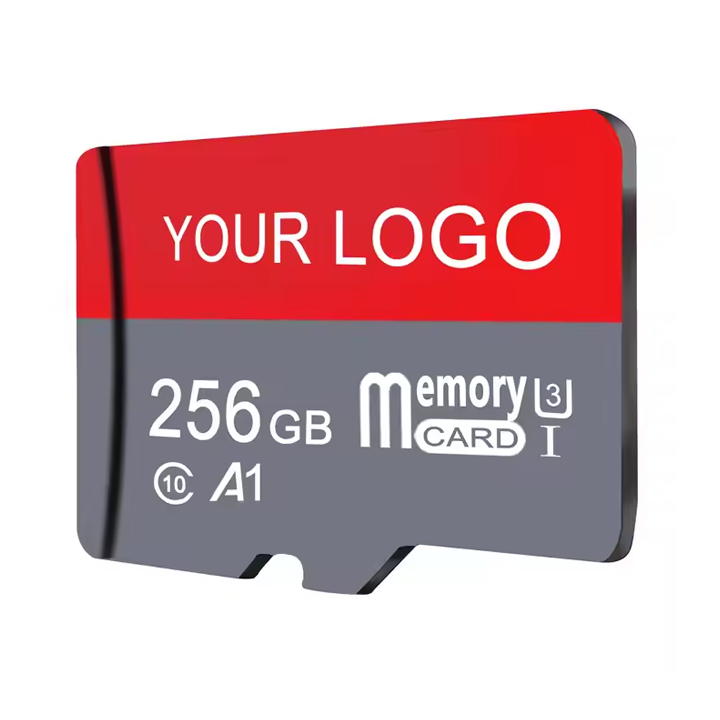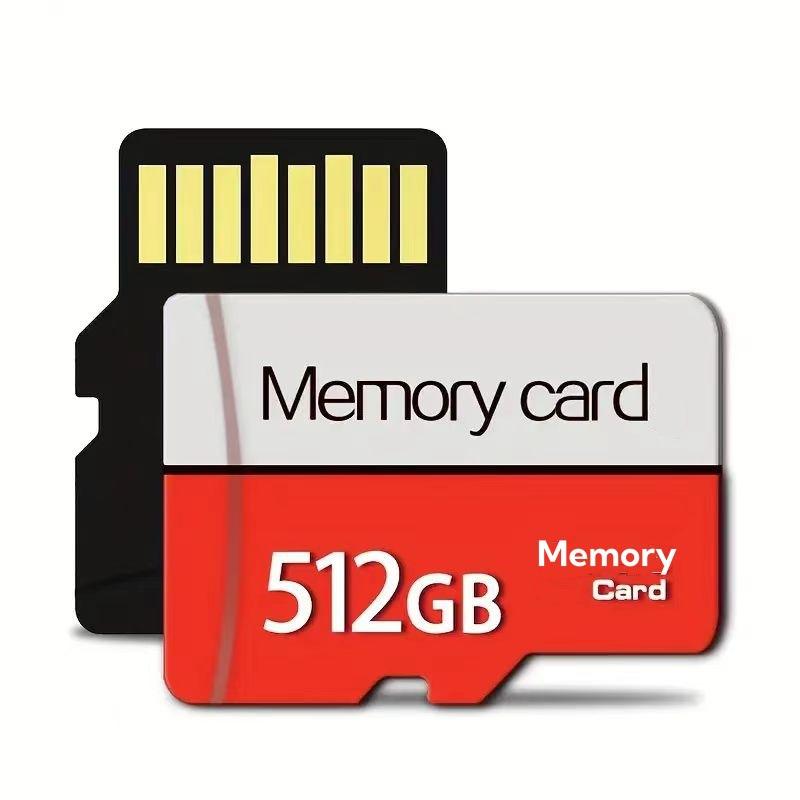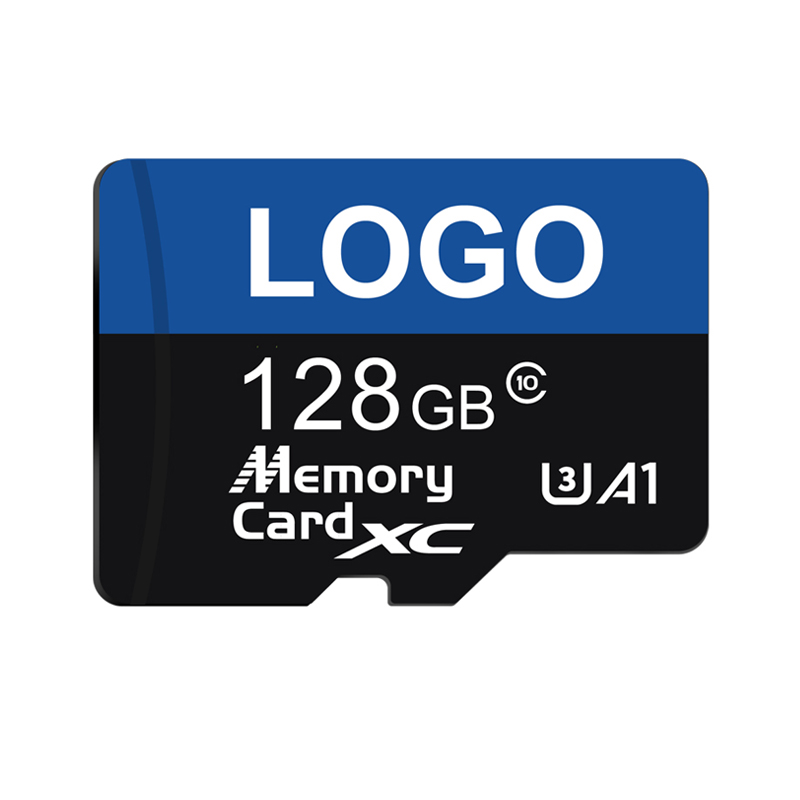
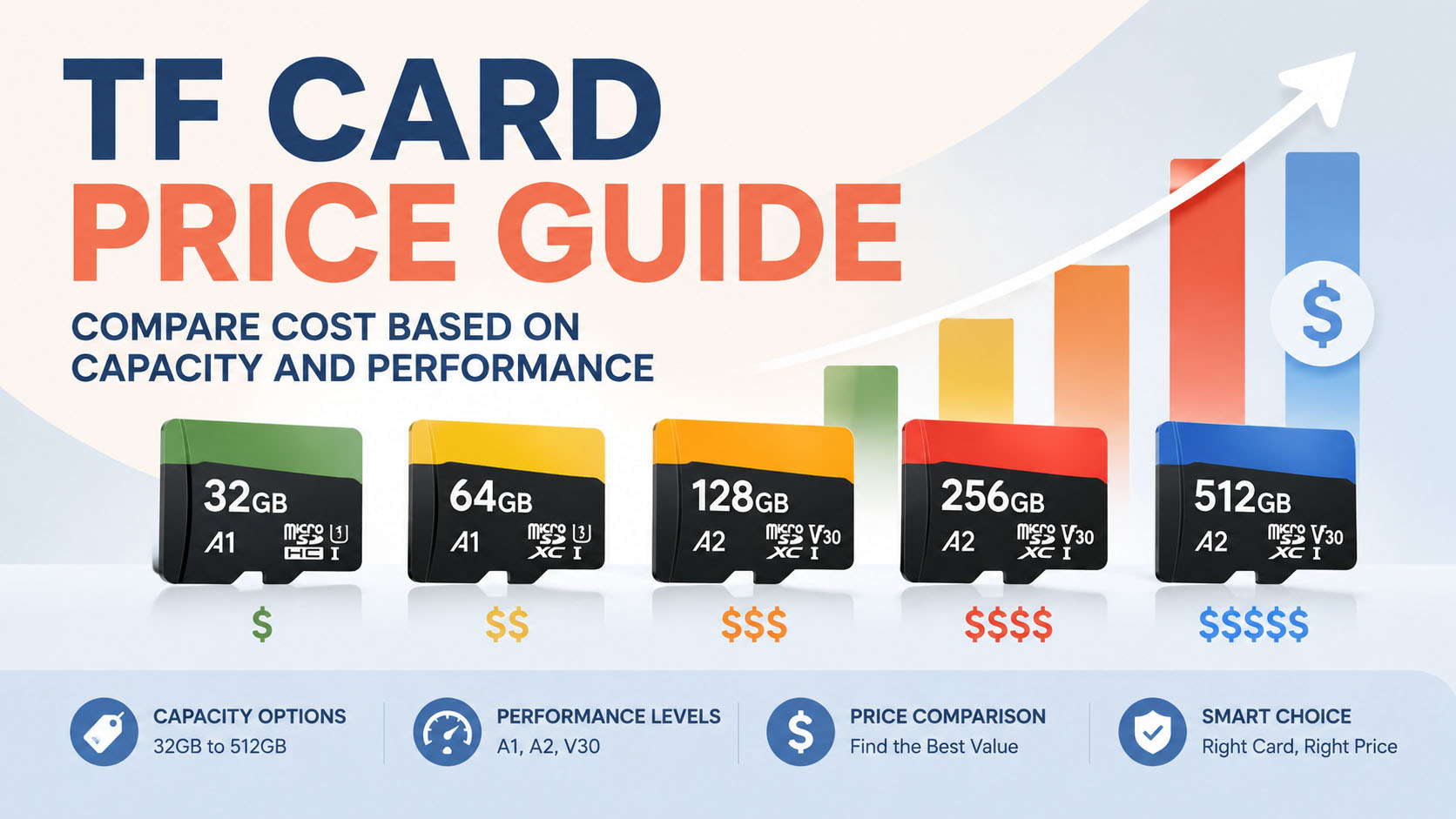
Choosing the right TF card (microSD card) is not simply about finding the lowest price. Capacity, NAND flash quality, read/write speed, application performance, durability, controller configuration, packaging, testing requirements, and order volume can all affect the final cost.
For buyers, importers, distributors, device manufacturers, and OEM customers, the key question is:
Which TF card offers the best balance of price, capacity, performance, reliability, and long-term supply?
This TF card price guide explains how capacity and performance affect memory card pricing, how to compare 32GB, 64GB, 128GB, 256GB, 512GB and higher-capacity cards, and how supply-chain and OEM capabilities can help reduce total procurement costs.
Quick Answer: How Much Does a TF Card Cost?
There is no single fixed price for a TF card. A 32GB card and a 32GB high-speed industrial-grade card can have significantly different costs even though their storage capacity is identical.
As a general purchasing rule:
| Factor | Lower-Cost Option | Higher-Cost Option | Price Impact |
|---|---|---|---|
| Capacity | 32GB–64GB | 256GB–1TB+ | High |
| NAND | Standard-grade flash | Higher-grade / selected flash | Medium–High |
| Speed | C10 / U1 | U3 / V30 / A2 | Medium–High |
| Application | Basic storage | 4K video / gaming / surveillance | Medium |
| Controller | Standard controller | High-performance controller | Medium |
| Testing | Standard QC | Full capacity + speed + aging tests | Medium |
| Packaging | Bulk packaging | Retail blister / customized packaging | Medium |
| Branding | Neutral / generic | Private label / OEM | Low–Medium |
| Order Quantity | Small MOQ | Bulk production | High impact on unit price |
| Supply Condition | Spot purchase | Long-term supply agreement | High impact on stability |
The lowest TF card price is not necessarily the lowest total cost. For commercial buyers, a slightly higher unit price may be worthwhile if it provides better consistency, lower failure rates, stable supply, and fewer after-sales issues.
TF Card Price by Capacity
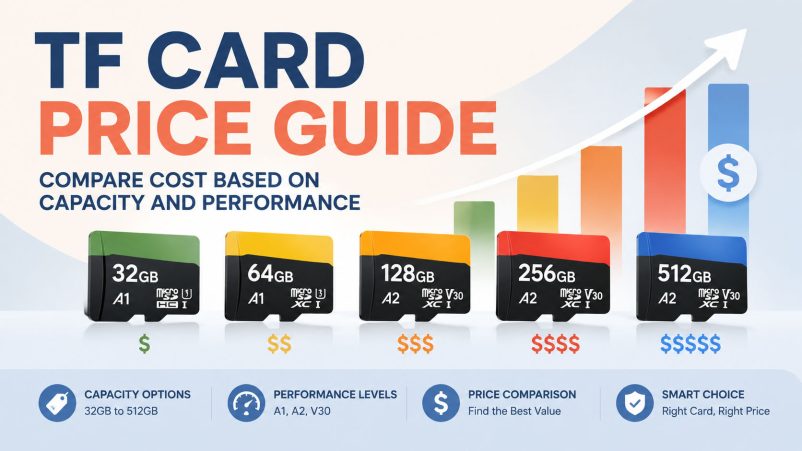
Capacity is one of the most visible factors affecting TF card pricing. However, the price per gigabyte does not always increase proportionally with capacity.
| TF Card Capacity | Typical Position | Suitable Applications | Relative Cost | Best For |
|---|---|---|---|---|
| 32GB | Entry level | Basic devices, MP3, older cameras | $ | Budget applications |
| 64GB | Mainstream entry | Phones, dash cams, basic cameras | $$ | Everyday use |
| 128GB | Popular mainstream | Cameras, drones, phones, surveillance | $$$ | Best balance |
| 256GB | High capacity | 4K video, gaming, professional cameras | $$$$ | Heavy storage |
| 512GB | Large capacity | 4K/8K workflows, surveillance, gaming | $$$$$ | Professional users |
| 1TB+ | Ultra-high capacity | Professional video, large datasets | $$$$$+ | Specialized applications |
The most cost-effective capacity depends on the application. For many mainstream products, 128GB and 256GB can offer a better balance between usable storage and cost than simply buying the cheapest 32GB card.
The SD Association classifies capacities above 32GB and up to 2TB under the SDXC standard, while SDUC covers capacities above 2TB up to 128TB.
Current TF Card Market Pricing: Why Prices Change
TF card pricing is closely connected to NAND flash pricing. NAND is the main storage component inside a memory card, so changes in NAND supply and demand can eventually affect card prices.
TrendForce’s July 2026 data showed memory-card spot prices of approximately $4.00–$4.90 for 32GB, $6.20–$7.10 for 64GB, and $12.10–$13.00 for 128GB in its tracked market data. These figures are industry spot-market references rather than fixed OEM quotations.
The underlying NAND market has also been moving upward. TrendForce reported increases in several NAND contract-price categories in June 2026, including an average increase of 8.72% for its tracked 128Gb MLC category.
Therefore, a professional buyer should avoid treating an online TF card price as a permanent benchmark.
| Pricing Factor | Why It Matters |
|---|---|
| NAND wafer price | Directly affects memory component cost |
| NAND supply | Limited supply can increase component prices |
| Controller cost | Higher-performance controllers increase BOM cost |
| Capacity | More NAND generally means higher cost |
| Speed requirement | Faster sustained write performance requires better components and tuning |
| Packaging | Customized packaging increases unit cost |
| Testing | Additional testing increases manufacturing cost |
| Order volume | Larger orders usually improve purchasing efficiency |
| Exchange rate | Important for international purchasing |
| Freight | Affects landed cost |
| Market cycle | NAND prices can rise and fall significantly |
Important: Retail prices, distributor prices, wholesale prices, and OEM factory prices should not be compared directly because they contain different margins, packaging costs, logistics costs, and service costs.
How Capacity Affects TF Card Price
A common purchasing mistake is comparing cards only by price.
For example:
| Product | Capacity | Unit Price | Price per GB | Possible Value |
|---|---|---|---|---|
| TF Card A | 32GB | Low | High | Basic |
| TF Card B | 64GB | Higher | Lower | Better |
| TF Card C | 128GB | Higher | Lower | Excellent |
| TF Card D | 256GB | Higher | Potentially lower | Excellent for heavy use |
| TF Card E | 512GB | Highest | Depends on specification | Professional |
A higher-capacity card may have a higher unit price but a lower cost per gigabyte.
The basic calculation is:
Cost per GB = TF Card Price ÷ Usable Capacity
However, professional procurement should also consider:
Total Cost of Ownership = Product Cost + Logistics + Testing + Failure Cost + Warranty Cost + After-Sales Cost
This is especially important for distributors and device manufacturers.
TF Card Price vs Performance
Capacity is only half of the equation. Performance class can also have a significant effect on price.
The SD Association defines several performance systems, including Speed Class, UHS Speed Class, Video Speed Class, and Application Performance Class. UHS Speed Class includes U1 and U3, while Video Speed Class includes V30, V60 and V90 depending on the host interface.
TF Card Speed Class Comparison
| Rating | General Meaning | Typical Use | Cost Level |
|---|---|---|---|
| Class 10 | Basic high-speed category | Basic storage | $ |
| U1 | Mainstream write performance | Phones, basic cameras | $$ |
| U3 | Higher sustained performance | Action cameras, drones | $$$ |
| V30 | Video-oriented sustained performance | 4K video | $$$ |
| V60 | Professional video | High-end cameras | $$$$ |
| V90 | Very high-performance video | Professional workflows | $$$$$ |
| A1 | App performance class | Android-compatible applications | $$ |
| A2 | Enhanced application performance | Faster app/data access | $$$ |
A key point is that advertised maximum read speed is not the same as sustained write performance.
For video recording, sustained write performance can be more important than the headline read-speed number. The SD Association notes that speed classes are designed to provide a minimum sequential performance level under defined conditions, which is particularly important for video recording.
A1 vs A2: Does A2 Cost More?
Yes, in many cases A2-rated products cost more because A2 requires higher random read/write performance.
The SD Association specifies minimum random-performance requirements for A1 and A2, and A2 performance requires both an A2-capable card and an A2-capable host device to realize the full benefit.
| Feature | A1 | A2 |
|---|---|---|
| Application performance | Good | Higher |
| Random read/write | Standard | Higher |
| Suitable for apps | Yes | Better |
| Host requirement | A1-compatible | A2-compatible |
| Price | Lower | Usually higher |
| Recommended for | General Android use | Performance-focused applications |
Buying tip: Do not pay extra for A2 if the target device cannot take advantage of A2 performance.
32GB vs 64GB vs 128GB vs 256GB vs 512GB
For most buyers, capacity should be selected according to the device and data workload.
| Capacity | Phone | Camera | Dash Cam | Drone | Surveillance | Gaming |
|---|---|---|---|---|---|---|
| 32GB | Basic | Basic | Basic | Limited | Basic | Limited |
| 64GB | Good | Good | Good | Basic | Good | Basic |
| 128GB | Excellent | Excellent | Excellent | Excellent | Excellent | Good |
| 256GB | Excellent | Excellent | Excellent | Excellent | Excellent | Excellent |
| 512GB | Device-dependent | Professional | Long recording | Professional | Long-term recording | Excellent |
| 1TB+ | Device-dependent | Specialized | Device-dependent | Specialized | High-capacity systems | Heavy users |
Best TF Card Capacity for Different Applications
| Application | Recommended Capacity | Recommended Performance |
|---|---|---|
| Smartphone | 128GB–256GB | A1/A2, U1/U3 |
| Action Camera | 128GB–256GB | U3 / V30 |
| Drone | 128GB–512GB | U3 / V30 |
| Dash Cam | 64GB–256GB | High-endurance, suitable write performance |
| Security Camera | 64GB–256GB+ | High-endurance |
| 4K Camera | 128GB–512GB | U3 / V30 or higher |
| Gaming | 128GB–1TB+ | High read performance |
| Industrial Device | Application dependent | Industrial-grade specification |
Why Two 128GB TF Cards Can Have Very Different Prices
This is one of the most important concepts for buyers.
Two cards may both say “128GB,” but their internal configurations can be very different.
| Specification | Standard 128GB | Premium 128GB |
|---|---|---|
| Capacity | 128GB | 128GB |
| NAND | Standard | Selected / higher-grade |
| Controller | Standard | Higher-performance |
| Read speed | Standard | Higher |
| Write speed | Standard | Higher |
| Random performance | Standard | Enhanced |
| Endurance | Standard | Higher |
| Testing | Standard QC | Expanded QC |
| Application | General storage | Professional / demanding |
| Price | Lower | Higher |
This is why TF card price should always be evaluated together with specification.
A quotation such as “128GB TF card, $X” is incomplete unless it also identifies the NAND configuration, controller, speed class, testing standard, packaging, warranty terms, and order quantity.
What Determines the Wholesale Price of a TF Card?
For importers and distributors, wholesale pricing normally depends on the complete BOM and commercial requirements rather than capacity alone.
| Cost Component | Impact on Wholesale Price |
|---|---|
| NAND flash | Very High |
| Controller | Medium |
| PCB / components | Low–Medium |
| Card assembly | Low |
| Firmware / performance tuning | Medium |
| Testing | Low–Medium |
| Packaging | Low–Medium |
| Printing / branding | Low–Medium |
| Certification requirements | Medium–High |
| MOQ | High |
| Logistics | Medium |
| Payment terms | Low–Medium |
| Warranty requirements | Medium |
For a large OEM project, the final quotation may therefore be substantially different from the price of an off-the-shelf retail memory card.
Supply Chain Advantage: Why It Matters for TF Card Pricing
A reliable TF card supplier should provide more than a low initial quotation.
A strong supply chain can help buyers manage component sourcing, quality consistency, production scheduling, capacity planning, packaging, logistics, and after-sales support.
Supply Chain Advantages for Wholesale Buyers
| Supply Chain Capability | Buyer Benefit |
|---|---|
| Multiple component sourcing channels | Reduces supply risk |
| NAND sourcing experience | Better component selection |
| Controller matching | Improves performance compatibility |
| Batch testing | Reduces inconsistent batches |
| Production planning | More predictable delivery |
| Flexible capacity allocation | Supports different order sizes |
| Packaging supply chain | Simplifies private-label projects |
| Logistics coordination | Reduces procurement workload |
| Long-term supplier relationships | Better price and supply stability |
| Quality traceability | Easier problem analysis |
In a volatile NAND market, supply-chain management becomes especially important. Recent industry data indicates that NAND pricing and supply conditions remain dynamic in 2026, making inventory planning and supplier stability increasingly important for commercial buyers.
OEM TF Card Pricing: What Can Be Customized?
For brands and device manufacturers, OEM capability can be more valuable than simply finding the lowest generic TF card price.
A professional OEM/ODM memory card program can typically involve:
| OEM Item | Possible Customization |
|---|---|
| Capacity | 32GB / 64GB / 128GB / 256GB / 512GB / 1TB+ |
| Speed class | C10 / U1 / U3 / V30 / etc. |
| Application class | A1 / A2 |
| Label | Brand logo / product information |
| Card color | Customized according to project |
| Packaging | Blister / box / paper card / bulk |
| Printing | Logo, capacity, specification |
| Serial number | Project-dependent |
| Barcode | Customized |
| User manual | Customized |
| Warranty card | Customized |
| Retail packaging | Private label |
| Product combination | Card + adapter / reader where required |
OEM TF Card Development Process
| Step | Process |
|---|---|
| 1 | Define capacity and target application |
| 2 | Define read/write performance |
| 3 | Select suitable NAND and controller |
| 4 | Confirm device compatibility |
| 5 | Prepare samples |
| 6 | Conduct capacity and performance testing |
| 7 | Confirm label and packaging |
| 8 | Pilot production |
| 9 | Quality inspection |
| 10 | Mass production |
| 11 | Shipment and after-sales support |
This approach is particularly useful for security camera brands, dash cam companies, smart-device manufacturers, consumer electronics brands, distributors, and e-commerce sellers.
How OEM Can Reduce the Total Cost
OEM does not always mean “the cheapest unit price.” The objective is to optimize the total commercial cost.
| Purchasing Strategy | Short-Term Cost | Long-Term Value |
|---|---|---|
| Buy random low-price cards | Low | Low |
| Buy standard wholesale cards | Medium | Medium |
| Use stable OEM specification | Medium | High |
| Long-term OEM supply | Potentially lower | Very High |
| Customized packaging + stable supply | Medium | Very High |
| Multi-capacity product portfolio | Medium | High |
A stable OEM specification can reduce repeated sampling, packaging redesign, product listing changes, compatibility testing, and supplier switching costs.
How to Get the Best TF Card Price
If you are sourcing TF cards in bulk, provide your supplier with as much information as possible.
Information to Include in an RFQ
| RFQ Item | Example |
|---|---|
| Product | TF / microSD card |
| Capacity | 128GB |
| Speed | U3 / V30 |
| Application | Dash cam |
| NAND | Supplier recommendation |
| Endurance | Standard / high endurance |
| Interface | UHS-I |
| Label | Private label |
| Packaging | Customized retail box |
| Quantity | 10,000 pcs |
| Destination | USA / Europe / other market |
| Target delivery | Required date |
| Warranty | Required warranty period |
A detailed RFQ allows the supplier to recommend a realistic specification instead of simply quoting the cheapest available component.
TF Card Price Comparison Checklist
Before comparing quotations, check whether the products actually have the same specification.
| Question | Supplier A | Supplier B | Supplier C |
|---|---|---|---|
| Capacity | ✓ | ✓ | ✓ |
| NAND specification | ? | ? | ? |
| Controller | ? | ? | ? |
| Read speed | ✓ | ✓ | ✓ |
| Sustained write speed | ? | ? | ? |
| Speed class | ✓ | ✓ | ✓ |
| A1/A2 | ? | ? | ? |
| V30 | ? | ? | ? |
| Endurance | ? | ? | ? |
| Capacity test | ? | ? | ? |
| Speed test | ? | ? | ? |
| Packaging | ✓ | ✓ | ✓ |
| Warranty | ? | ? | ? |
| MOQ | ✓ | ✓ | ✓ |
| Lead time | ? | ? | ? |
If several fields are unknown, the quotations are not directly comparable.
Low Price vs High-Quality TF Card
The cheapest TF card can be attractive for highly price-sensitive applications, but it may not be the best option for continuous recording or demanding devices.
| Priority | Recommended Strategy |
|---|---|
| Lowest purchase price | Standard specification |
| Best cost per GB | 128GB / 256GB mainstream capacity |
| 4K video | U3 / V30 |
| App performance | A2 where host supports A2 |
| Security camera | High-endurance specification |
| Long-term OEM project | Stable NAND + controller configuration |
| Premium brand | Higher performance + stronger QC |
| Large distributor | Multiple capacities + stable supply |
Why Extremely Cheap TF Cards Can Be Risky
A TF card that is significantly cheaper than the market may deserve additional verification.
Potential issues include:
- Incorrect capacity labeling
- Inconsistent NAND quality
- Low sustained write performance
- Poor controller compatibility
- Unstable firmware
- High failure rates
- Insufficient testing
- Inconsistent batches
- Shorter endurance
- Weak after-sales support
For B2B buyers, the real question is not:
“What is the cheapest 128GB TF card?”
It is:
“What is the lowest reliable cost for a specification that meets my application?”
TF Card Quality Control for OEM and Wholesale Orders
A professional quality-control program should test more than whether a computer recognizes the card.
| QC Test | Purpose |
|---|---|
| Capacity verification | Confirms actual storage capacity |
| Read-speed test | Checks sequential performance |
| Write-speed test | Checks writing performance |
| Random performance | Useful for application workloads |
| File-system test | Checks formatting and compatibility |
| Bad-block / media test | Helps identify flash problems |
| Aging / burn-in test | Helps identify unstable units |
| Device compatibility | Confirms target-device operation |
| Appearance inspection | Checks physical quality |
| Label inspection | Confirms branding accuracy |
| Packaging inspection | Prevents shipment errors |
The exact QC procedure should be adapted to the product application, target market, and agreed specification.
How to Choose the Right TF Card for Your Business
For most commercial buyers, the following decision process works well:
| Step | Question |
|---|---|
| 1 | What device will use the card? |
| 2 | What capacity is required? |
| 3 | What is the minimum write speed? |
| 4 | Is U3 or V30 required? |
| 5 | Is A1/A2 important? |
| 6 | Is high endurance required? |
| 7 | What is the target purchase volume? |
| 8 | Do you need private-label packaging? |
| 9 | What QC requirements are needed? |
| 10 | What is the target landed cost? |
Recommended Starting Points
| Buyer Type | Recommended Starting Specification |
|---|---|
| Budget distributor | 64GB / 128GB, C10/U1 |
| Consumer electronics distributor | 128GB / 256GB, U3 |
| Camera accessories brand | 128GB / 256GB, U3/V30 |
| Drone accessories brand | 128GB–512GB, U3/V30 |
| Dash cam brand | 64GB–256GB, endurance-focused |
| Security camera brand | 64GB–256GB+, endurance-focused |
| Gaming accessories brand | 128GB–1TB+, high read performance |
| Premium OEM brand | Customized capacity + performance + packaging |
TF Card Price FAQ
What is the average price of a 128GB TF card?
There is no universal average because price depends on NAND, controller, speed class, application, brand, packaging, order volume, and market conditions.
For reference, TrendForce’s July 2026 tracked memory-card spot market showed 128GB microSD at approximately $12.10–$13.00. This is a market reference, not an OEM quotation or retail price.
Is a 256GB TF card worth buying instead of 128GB?
For users who record large amounts of video, store games, or operate cameras and drones, 256GB can provide a better balance between capacity and convenience. For basic storage, 128GB may be more economical.
Why are two 256GB TF cards priced differently?
The difference can come from NAND quality, controller, speed rating, endurance, testing, firmware, packaging, brand positioning, and supplier margin.
Is a faster TF card always better?
No. The card should match the host device. A high-performance card can be unnecessary if the device cannot utilize its speed.
Is U3 better than U1?
U3 provides a higher minimum sustained write-performance class than U1 and is generally more suitable for demanding video applications. The correct choice depends on the recording requirements of the device.
Is V30 important for 4K video?
V30 is commonly used for 4K-oriented recording applications because it represents a video speed class with a defined minimum sustained performance under the standard’s conditions. However, buyers should always check the camera manufacturer’s recommended card specification.
Is A2 worth paying extra for?
Only when the host device supports A2 and the application benefits from higher random performance. Otherwise, A1 may provide better value.
What is the best TF card capacity for a dash cam?
For many dash cams, 64GB–256GB is a practical range, but high-endurance characteristics can be more important than simply maximizing capacity.
What is the best TF card capacity for a security camera?
64GB–256GB or higher can be appropriate depending on resolution, recording mode, frame rate, retention period, and whether recording is continuous or event-based.
Can TF cards be customized with my logo?
Yes. For OEM/private-label projects, customization can include card labels, packaging, barcodes, manuals, capacity combinations, and other project-specific requirements.
What MOQ is required for OEM TF cards?
MOQ depends on capacity, specification, NAND availability, packaging, printing requirements, and the supplier’s production model. Standard products generally have more flexible quantities than fully customized OEM products.
Can a supplier provide multiple capacities under one brand?
Yes. A common OEM product portfolio can include 32GB, 64GB, 128GB, 256GB, 512GB and 1TB+ versions, allowing distributors to address different price segments.
How can I get a better wholesale TF card price?
The most effective approach is to provide a clear specification and realistic annual volume. Suppliers can then optimize NAND sourcing, controller selection, packaging, production scheduling, and logistics.
TF Card Price Strategy for Distributors
For distributors, selling only one capacity can limit the potential customer base.
A better product matrix can cover multiple price levels:
| Product Tier | Capacity | Performance | Target Customer |
|---|---|---|---|
| Entry | 32GB / 64GB | C10 / U1 | Price-sensitive |
| Mainstream | 128GB | U1 / U3 | General users |
| Performance | 128GB / 256GB | U3 / V30 | Cameras / drones |
| Premium | 256GB / 512GB | U3 / V30+ | Professional users |
| High Capacity | 512GB / 1TB+ | Application-specific | Heavy storage |
This structure allows distributors to offer a good-better-best product strategy rather than competing solely on the lowest unit price.
TF Card Supply Chain and OEM Advantages for B2B Buyers
When purchasing TF cards for resale or integration, the supplier’s supply-chain capability can directly affect your final product cost.
A strong supplier should ideally be able to support:
- Stable NAND sourcing
- Controller matching
- Multiple capacity options
- Performance optimization
- Sample development
- Batch testing
- Capacity verification
- Speed verification
- OEM label printing
- Customized packaging
- Flexible MOQ options
- Production scheduling
- International logistics coordination
- Long-term supply planning
For brands, this means one supplier can potentially support the complete process from specification → sampling → testing → OEM packaging → mass production → shipment.
Final TF Card Buying Guide
The best TF card is not necessarily the card with the lowest price or the largest capacity.
For most buyers, the optimal product is the one that provides the right combination of:
| Key Factor | What to Look For |
|---|---|
| Capacity | Match actual storage requirements |
| Performance | Match device requirements |
| Speed Class | U1/U3/V30 as needed |
| Application Class | A1/A2 when relevant |
| NAND | Stable and suitable flash |
| Controller | Compatible and reliable |
| Endurance | Important for continuous recording |
| QC | Capacity + performance + reliability |
| Price | Competitive total cost |
| Supply | Stable long-term availability |
| OEM | Branding and packaging flexibility |
| Service | Responsive technical and after-sales support |
For B2B buyers, the best TF card price is the best combination of unit cost, performance, quality consistency, supply stability, and total cost of ownership.
If you are sourcing 32GB, 64GB, 128GB, 256GB, 512GB or 1TB+ TF cards, a professional OEM/ODM supplier can help you select the appropriate NAND and controller combination, optimize the specification for your target device, develop private-label packaging, and build a scalable multi-capacity product line.
TF Card Buyer Checklist
| Before Ordering | Confirmed? |
|---|---|
| Capacity | ✓ |
| Read speed | ✓ |
| Sustained write speed | ✓ |
| U1 / U3 | ✓ |
| V30 requirement | ✓ |
| A1 / A2 requirement | ✓ |
| Endurance requirement | ✓ |
| Target device compatibility | ✓ |
| NAND specification | ✓ |
| Controller specification | ✓ |
| QC requirements | ✓ |
| OEM logo | ✓ |
| Packaging | ✓ |
| MOQ | ✓ |
| Lead time | ✓ |
| Warranty | ✓ |
| Shipping terms | ✓ |
Bottom line: If price is your first priority, compare cost per GB. If performance matters, compare sustained write speed and speed class. If reliability matters, compare NAND, controller, testing, and endurance. If you are building a brand, compare OEM capability, supply stability, packaging, QC, and long-term support.
That is the most practical way to evaluate TF card pricing in today’s market.